Your Car’s Dashboard is a Glitchy Paperweight, and Here’s Why
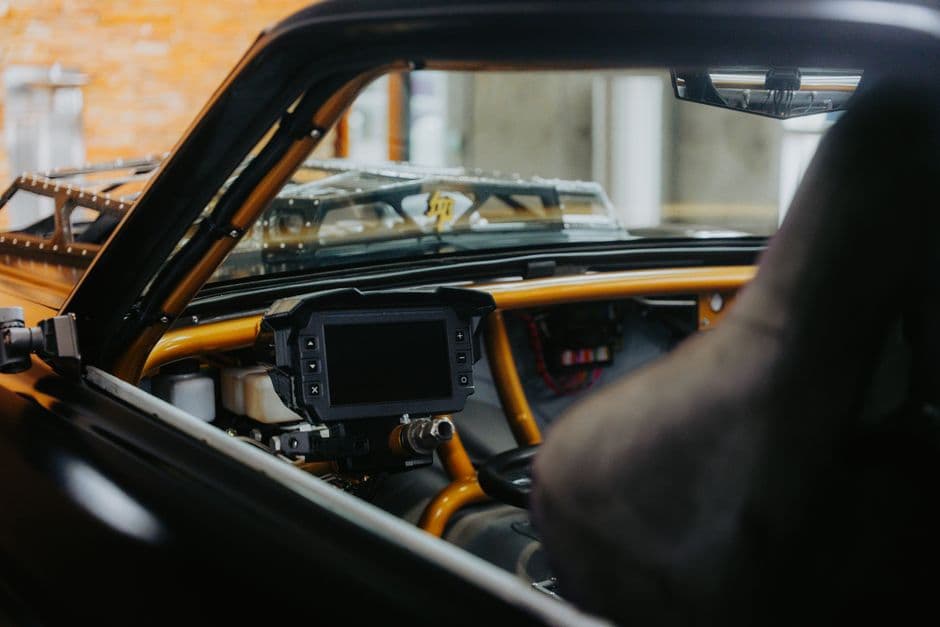
Modern infotainment systems have more power than the Apollo moon mission, yet they’re slower than a decade-old laptop. I’m tired of software bloat ruining the drive.
The first time I sat in a new luxury SUV that required a mandatory software update just to adjust the heated seats, I knew we’d crossed a line. We have reached a point where your vehicle's dashboard likely contains more raw processing power than the Apollo Guidance Computer, yet it struggles to pull up a map without stuttering.
As a gearhead who has fully embraced the electric transition, I’ve learned to appreciate the instant torque and quiet cabins of modern EVs. But there is a mounting frustration in the cockpit. We aren't being sold machines anymore; we’re being sold buggy, unoptimized software platforms that happen to have wheels attached. While manufacturers push for bigger screens and "immersive" experiences, they seem to have forgotten the fundamental requirement of a driver-facing interface: it needs to work the instant you press the button.
The Logic Gap
To understand why our screens feel sluggish, we have to look at the efficiency of code. In the early days of computing, engineers were forced to work with extreme hardware limitations. As noted in Mehran's technical analysis of 8-bit systems, programmers had to write highly optimized, discrete logic to make systems function within strict memory and processing constraints. Every instruction mattered because the hardware provided no room for waste.
Modern automotive infotainment systems have moved in the opposite direction. Designers now operate under the assumption that hardware will solve the problem. If a menu transition is laggy, the industry response isn't to optimize the code; it’s to toss in a more powerful processor for the next model year. This leads to massive, bloated software stacks that rely on heavy frameworks and background processes that the average driver never sees.
I experienced this contrast firsthand recently. My daily driver for years was a 2012 Acura TL, a car that doesn't win awards for modern connectivity, but its interface is a masterclass in snappiness. The buttons are physical, the screen is basic, and the response is instantaneous. Contrast that with my week testing a 2024 luxury EV, which boasted a "giga-flop" processor for its massive OLED screen. Despite having exponentially more computing power, the UI would frequently stutter when switching between the climate menu and the navigation map. It’s like trying to run a modern, heavy operating system on a machine that was never intended to handle the overhead.
More Isn't Better
We are trapped in a cycle of "spec sheet marketing." When you walk into a dealership, you’re told about the high screen resolution or the cloud-based capabilities. What you aren't told is that the underlying operating system is often just a bloated web browser running on a chip that wasn't designed for a vehicle's specific environment.
Unlike a computer sitting on a desk, a car’s head unit lives in a world of extreme heat, cold, and constant vibration. By packing these systems with complex, unoptimized software, manufacturers are introducing failure points that didn't exist when cars used physical knobs and dedicated logic controllers. When a screen freezes, it isn't just an annoyance; it’s a distraction that pulls your eyes off the road.
I’ve spent time in both the 2024 Ioniq 5 and the latest Porsche Taycan, and they are perfect examples of the divide. The Ioniq 5 balances its digital interface well, keeping enough physical buttons for the functions that matter, so you aren't digging through three sub-menus just to change the fan speed. The Taycan, meanwhile, shows that you can have a "digital-first" cockpit that remains responsive, likely because Porsche has invested heavily in software optimization that prioritizes frame rates to keep the experience fluid. Contrast this with some of the mid-range budget EVs I’ve tested recently, where the screen feels like an aging smartphone left in a hot car—slow to wake, sluggish to scroll, and prone to random reboots.
Repairability and the Long Tail
The real cost of this software bloat shows up about five years after you drive the car off the lot. As manufacturers stop pushing updates or as the hardware becomes obsolete, you’re left with a screen that can’t keep up with modern connectivity standards. Unlike a mechanical component—where you can clean a throttle body or replace a belt—you cannot "fix" a software architecture that was poorly built from day one.
When we prioritize complex, hardware-hungry interfaces, we sacrifice longevity. A car that is built to last for two decades shouldn't have a dashboard that is essentially a digital paperweight after half that time.
If we want cars that feel as premium as their price tags suggest, the industry needs to rethink its approach. We need lean, reliable code that values responsiveness over flashy animations. We need to stop treating a vehicle’s interface like a social media app and start treating it like a piece of critical safety equipment. Until that happens, I’ll keep looking for the physical buttons that still provide the only interface I truly trust: the one that responds to a tactile press, every single time.