Why Your Car’s Simple Microcontrollers Outlast the Fancy Infotainment
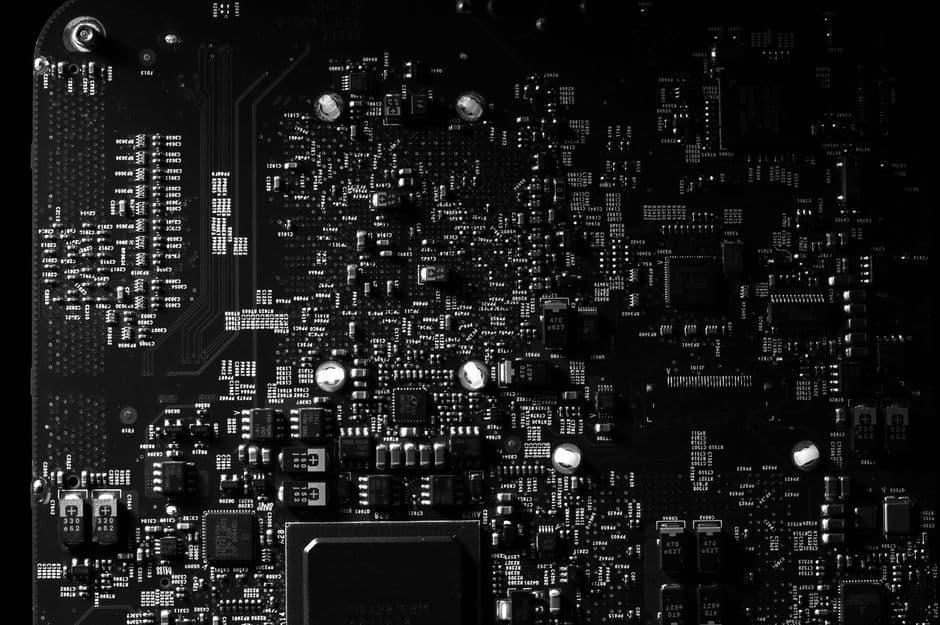
We celebrate the 50-year longevity of the Zilog Z80 chip while our modern touchscreens go obsolete in five. It’s time to demand better tech durability in our vehicles.
The Zilog Z80 microprocessor turned 50 years old recently, and it is still working. When the chip launched in 1976, it was designed to be efficient, reliable, and capable of handling instructions with a clock speed of 2.5 MHz (Goliath32). You can still find these chips operating in embedded systems today, quietly running equipment that hasn't seen a firmware update since the Reagan administration.
Contrast that with the infotainment system in your current daily driver. If your car is more than six years old, you likely know the feeling of the screen stuttering while you try to change the radio station or the navigation map hanging for an eternity when you need a turn-by-turn instruction. While the Z80 remains a testament to the idea of building for longevity, the automotive industry has pivoted toward a strategy of planned obsolescence wrapped in glossy plastic and high-resolution pixels.
The Problem with Big Glass
Modern car interiors are increasingly defined by "big glass"—those massive, tablet-style displays that stretch across the dashboard. They look sharp on the showroom floor and satisfy the marketing department's desire to call a cabin "high-tech." However, these systems are essentially low-end consumer PCs trapped in a thermally hostile environment.
When an automaker integrates a proprietary operating system, they aren't just selling you a car; they are selling you a software platform that requires constant support. Once that support ends, the "smart" features become a liability. We see this in how modern vehicles rely on cloud-connected services for basic functionality. If the server goes down, or the company decides to sunset a specific application, you aren't left with a broken radio—you are left with a useless screen that dominates your interior.
I remember testing an early electric hatchback that had a fantastic interface for its first two years. By year four, it was slow, the Bluetooth pairing would drop randomly, and the backup camera—which should have been a simple, hardware-level signal—would occasionally glitch because the main OS was hung up on a background process. That isn't progress. That is just poorly managed computer hardware.
Complexity vs. Repairability
The Z80 was a masterpiece of simplicity. Because it was simple, it was easy to debug, easy to power, and easy to replace. Modern automotive microcontrollers, by comparison, are hyper-specialized and deeply embedded into the vehicle's "brain."
There is a real, tangible trade-off being made here. Automakers are trading long-term repairability for short-term features. A simple microcontroller that manages your window motor or your seat position will likely outlast the life of the car. These are chips that do one thing and do it well. But when we move that logic into a central, bloated infotainment stack, we lose that resilience.
If a simple window controller fails, you replace a module. If the central infotainment screen fails in many modern cars, the dealer often claims the entire unit must be replaced, sometimes at a cost that makes the car look like a write-off. We are trading the durability of mechanical-grade silicon for the convenience of streaming apps that nobody will want to use in a decade anyway.
What Real Owners Actually Want
I talk to plenty of car people who have accepted the EV transition. They like the instant torque and the low center of gravity. But when you ask them what they hate about their current vehicles, it’s rarely the motor or the battery range. It’s the user interface. They want a steering wheel that tells them what the tires are doing, not a screen that buries the climate controls three menus deep.
The Z80 succeeded because it was a tool, not a toy. It was meant to be used as a component within a larger, reliable system. Automotive engineers today would do well to look back at that design philosophy. Instead of trying to turn a vehicle into a smartphone on wheels, we should be advocating for a "modular" approach to cabin tech.
If the infotainment system is going to be the most rapidly aging part of the car, it shouldn't be physically tethered to the critical systems that control how the vehicle drives. We should be able to upgrade our dashboard tech as easily as we upgrade a phone, without it impacting the car’s ability to perform its core functions.
Until that happens, keep an eye on the simple stuff. The next time you sit in a car, ignore the fancy menu transitions. Check the physical buttons, look at the tactile feel of the knobs, and ask yourself: will this interface still make sense when the screen starts to flicker? If the answer is no, you are looking at a piece of equipment that is already destined for the landfill, regardless of how fast it charges or how many miles it gets per kilowatt-hour.
True luxury in a vehicle isn't the resolution of the screen; it’s the certainty that the car will do exactly what you want it to do, every time you turn the key, for as long as you own it. We have the technology to make that happen. We just need to stop prioritizing the "smart" experience over the long-term reality.