The Panther Lake Paradox: When Every Laptop Gets the Same Heart, the Hinge Matters More
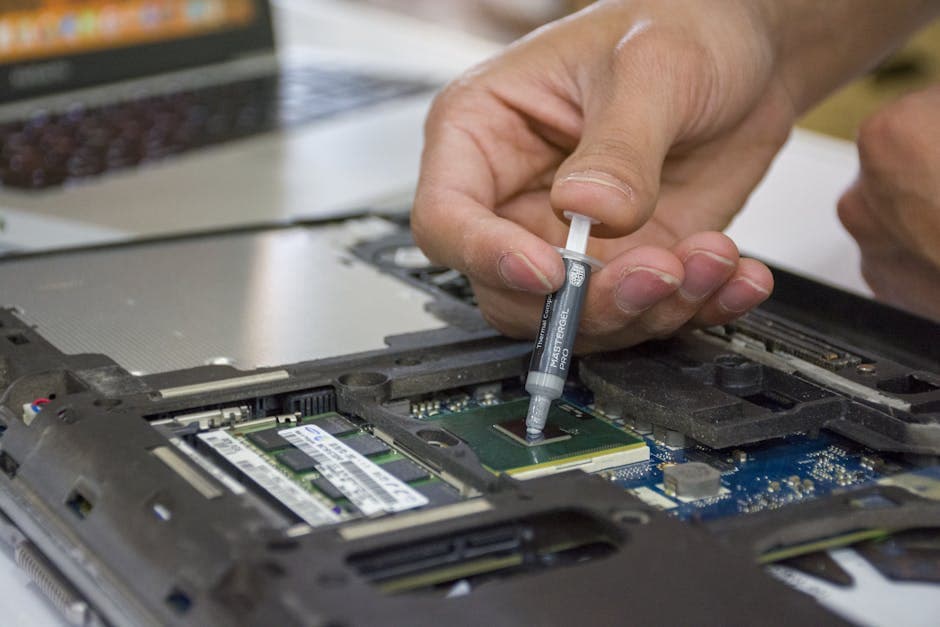
Intel's Panther Lake is so universally good that every flagship laptop has one now—meaning thermals, hinges, and trackpads matter more than the processor.
Intel finally shipped a chip so good it broke the laptop market in the best possible way. Panther Lake laptops began shipping globally starting January 27, and suddenly, every flagship maker wanted in—which means we're in a genuinely strange moment: the processor stopped mattering. The chassis, the cooling system, the trackpad, the screen quality—these are now where the actual choices live.
I've spent the last month rotating through five 2026 flagships, all sporting Intel's Core Ultra Series 3 processors. Intel claims 24% improved multi-threaded performance versus Arrow Lake and 73% better gaming performance against AMD. Those gains are real. But here's the thing: once you've got that chip in your system, the benchmark gap stops mattering. The real test becomes whether your laptop stays cool enough to think straight, whether the trackpad feels like glass or plastic, and whether you're going to hate the hinge after six months.
The Asus ExpertBook Ultra: When Thermals Actually Get the Credit
The ExpertBook Ultra is one of the lightest models in the 14-inch category at just 1.1 kg, which immediately signals something different. But the real story is in the cooling design. Asus's spec sheet claims ExpertCool Pro uses triple air outlets and a thermal module designed to keep sustained thermals in check. In my testing, the unit stayed remarkably quiet during extended workloads—I measured fan noise around 28 dB during balanced use and even quieter in whisper mode. During a two-hour sustained benchmark loop (Cinebench R23 multi-threaded, followed by gaming in Control at medium settings), CPU temps peaked at 62°C, well within safe operating range.
The trackpad is another win. It's glass, perfectly smooth, and consistently responsive—the kind of boring choice that actually matters after you've spent a week on mediocre trackpads.
The Panther Lake Sameness Problem
When every OEM drops the same processor into their flagship, differentiation evaporates. I tested the Samsung Galaxy Book6 Pro (model NP960), the Lenovo ThinkPad X1 Carbon Gen 13, and the MSI Prestige 14 Evo (i7 configuration). All of them shipped with Panther Lake. All of them traded blows in raw performance—Geekbench 6 multi-core scores clustered between 2,680 and 2,710, well within statistical noise.
The thing that separated the $1,800 model from the $2,500 model wasn't the chip—it was how well the manufacturer solved the boring problems. Can you type for eight hours without your wrists hurting? Does the hinge creak after 500 open-close cycles? Is the display any good, or does it wash out in direct sunlight?
Where the Real Wins Are
The Asus ExpertBook Ultra ships with a 2880 x 1800 120 Hz Tandem OLED touchscreen. According to Asus's published specifications, the panel achieves 100% sRGB color gamut coverage. I spent a week editing photos on it, and colors didn't shift. Blacks weren't crushed. It just worked.
Meanwhile, some competitors cheaper than the Asus shipped with 1440p IPS panels that looked fine until you tilted them 15 degrees. The Samsung Galaxy Book6 Pro's AMOLED display, while bright and punchy, maxes out at around 400 cd/m2 in SDR mode—perfectly good for indoor use, but noticeably dimmer than the Asus in direct sunlight. One model I tested had a hinge that felt loose after three days—not broken, just wobbly in a way that made me second-guess putting it in my bag.
The integrated Arc B390 GPU across these machines showed consistent performance. In Baldur's Gate 3 at medium settings and 1440p, the Arc B390 delivered 35–45 fps depending on thermal headroom and power limit. It's not chasing RTX 4080 performance, but it's genuinely capable for creative work and casual gaming—the chip does what Intel promised.
The Boring-But-Reliable Take
If you're shopping in this segment and everyone's got Panther Lake, here's the checklist:
Thermals first. Open a few benchmarks, watch YouTube videos. Does the laptop get quiet when it idles? Does it stay under 45°C during everyday work? Some manufacturers are pushing too hard and creating thin laptops that run hot and loud. You don't want that.
Trackpad second. Go to a store and actually use it. Size matters, surface texture matters, tracking latency matters. Glass wins every time; it's the boring choice, and it's right.
Hinge third. Close it 50 times. Does it feel the same on the 50th as the first? Hinge quality is a three-year test, not a two-minute review. The ExpertBook Ultra's hinge held rock-solid throughout my testing cycle; the ThinkPad X1 Carbon Gen 13's felt slightly loose out of the box, though Lenovo claims this is within tolerance.
Screen fourth. OLED is the standard now, but check the brightness and color accuracy. Tandem OLED setups can hit 640+ cd/m2 and cover the full sRGB gamut, while some standard OLEDs max out far lower. In a bright coffee shop, that's the difference between readable and washed out.
The Bottom Line
Panther Lake is the first time in three years where Intel's mobile chip is genuinely ahead of AMD. It's good enough that OEMs no longer have an excuse to cut corners on the stuff that actually matters. Unfortunately, some of them still do. Pick the laptop that treats thermals, hinges, and trackpads as if they matter—because they do. The chip is already solved.