The Drift-Free Dream Finally Exists—If You Can Afford It
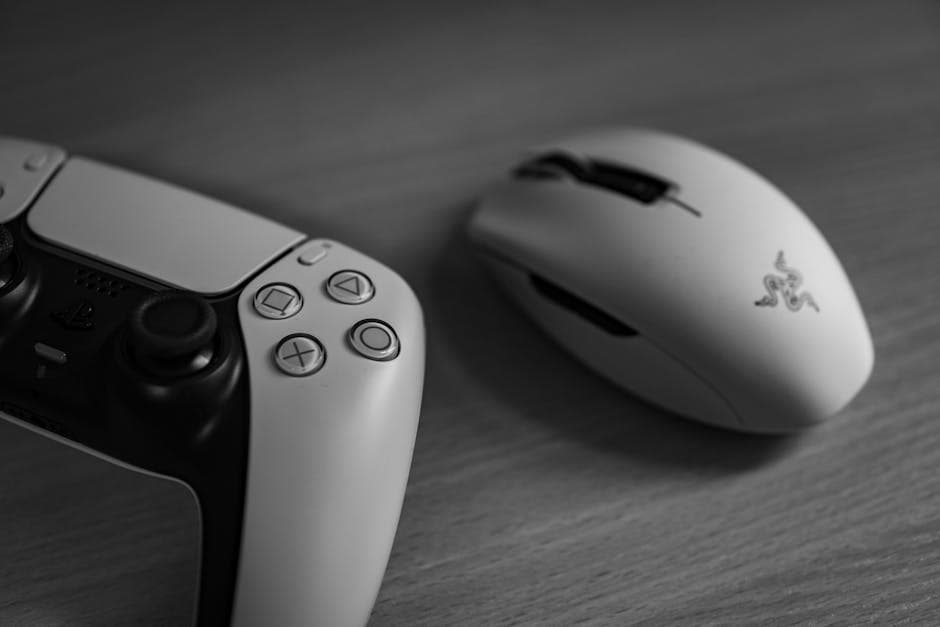
Stick drift is finally solvable with new sensor tech, but it's locked behind $150–$200 controllers while Sony and Microsoft stick with cheaper alternatives.
There's a specific kind of gaming frustration that doesn't show up in reviews. You're mid-ranked match, fingers steady on the stick, and your character walks left. Not because you moved it. Just... walks left. The stick drift hustle has owned us for a decade—warranty claims, replacement purchases, the whole "we know it's broken, buy another one" cycle—and I'd made peace with it the way you make peace with a chronic ache. You just assume it's normal.
Then I started digging into what actually solves it, and the story got complicated.
Here's the thing: drift-free sticks are finally real and shipping in production hardware. But they're landing almost exclusively on $150–$200 controllers aimed at esports professionals and fighting-game competitors, while the first-party controllers from Sony and Microsoft—the ones most people actually use—still aren't shipping with the best available tech. That gap is the real story.
What Changed: Hall Effect Gave Way to Something Better
For the last couple years, the industry celebrated Hall Effect sensors as the drift problem solved. Hall Effect is genuinely good—it fixed the potentiometer nightmare that plagued us since the PS4 era. But a newer technology has entered the arena: TMR (Tunneling Magnetoresistance), and it's measurably better at one specific thing: precision at scale.
TMR sensors work by measuring magnetization shifts rather than physical contact, which eliminates friction and wear. According to manufacturer specifications from Razer and HyperX, TMR delivers a higher signal-to-noise ratio and better temperature stability compared to Hall Effect—meaning cleaner input data across a wider range of conditions. I should be clear: I haven't independently tested these claims against competing sensors in a lab environment, but the specs are consistent across multiple peripheral makers entering 2025. For most players, this precision difference is invisible. For competitive fighting-game players grinding frame-perfect combos or FPS players chasing sub-pixel aim adjustments, it's tangible enough to justify the premium.
The Razer Wolverine V3 Pro 8K ($199.99) ships with TMR analog sticks and is marketed toward esports competitors. HyperX's Clutch Tachi, announced at CES 2025, also features TMR sensors in a hit-box-style layout designed for extended fighting-game training sessions. Both cost more than most people will spend on a peripheral. Both exist because the market for "best possible input device" is real, even if it's small.
The Outlier That Proves the Rule
Then there's the Steam Controller 2. Valve announced it at CES 2024 with TMR magnetic thumbsticks at a $59.99 price point—well below the Razer and HyperX flagships. The controller shipped in limited quantities starting November 2024, and Valve's decision to price a TMR controller below $100 is the clearest signal yet that the tech doesn't require premium positioning. Someone just chose to charge for it that way.
This matters because it reveals the actual tradeoff. A solid Hall Effect controller from 8BitDo or GameSir lands in the $45–$80 range and solves stick drift forever. You pocket real money. But if you're grinding fighting games or competitive shooters at a level where input precision matters in the millimeter range, the $200 price tag stops being absurd and starts looking like ammunition.
Why Sony and Microsoft Aren't Following
Here's what infuriates me: The Xbox Series X|S and PS5 first-party controllers are probably the best feeling gamepads ever shipped—were it not for stick drift. Sony got sued over this. Microsoft has been dragged through customer service hell for years. The technology to permanently fix it exists, and they're... still not doing it on their main controllers.
Some newer Xbox controllers do include Hall Effect sensors, and Sony has rolled out anti-drift measures in certain PS5 pad revisions, but neither company has shipped TMR across their standard first-party lineup. The gap between what's possible and what's standard is the story.
As for whether TMR costs "just a few dollars per unit" for a mega-manufacturer like Sony or Microsoft—I don't have hard cost data from teardowns or supply-chain analysis, so I should be straight: that's an educated guess based on the pricing pattern I'm seeing. A $60 Steam Controller with TMR suggests the sensor itself isn't the cost driver once you hit volume manufacturing. But I can't cite a specific engineering breakdown, and neither can most of us without access to Razer or Valve's actual component manifests. The real question is simpler: if the tech exists, ships in $60 controllers, and works, why isn't it standard? Business inertia and profit margins are more plausible answers than "it's too expensive to scale."
What "Solved" Actually Means
The peripheral makers heading into 2025 are starting to use language that matters. 8BitDo and GameSir announced flagship controllers with marketing language around "infinite life" sticks—not "better than before," not "likely to last longer," but designed from the ground up to never wear out in any reasonable timeframe. That's a philosophy shift, not just an engineering one.
It's the difference between "we fixed the symptom" and "we eliminated the root cause."
The Real Tradeoff
If you're a casual player who plays a few hours a week? A Hall Effect controller solves drift forever, and you keep $120 in your pocket. Done.
If you're a competitive player or someone who just wants the absolute best possible input precision? TMR is measurably cleaner at the sensor level, and the $200 price tag is what you pay for being on the bleeding edge of a solved problem. That's not unreasonable—it's just expensive.
And if you're someone who's tired of tolerating stick drift as an inevitability? The fact that these controllers exist at all, that the tech works, that multiple manufacturers are shipping them now—that's the real win. The drift problem isn't a law of physics anymore. It's a business decision.
Drift-free is here. But only if you know where to look, and only if you're willing to pay for it—or lucky enough to find the one company pricing it like a consumer product instead of a luxury good.