The Codex Micro: A Solution Looking for a Problem
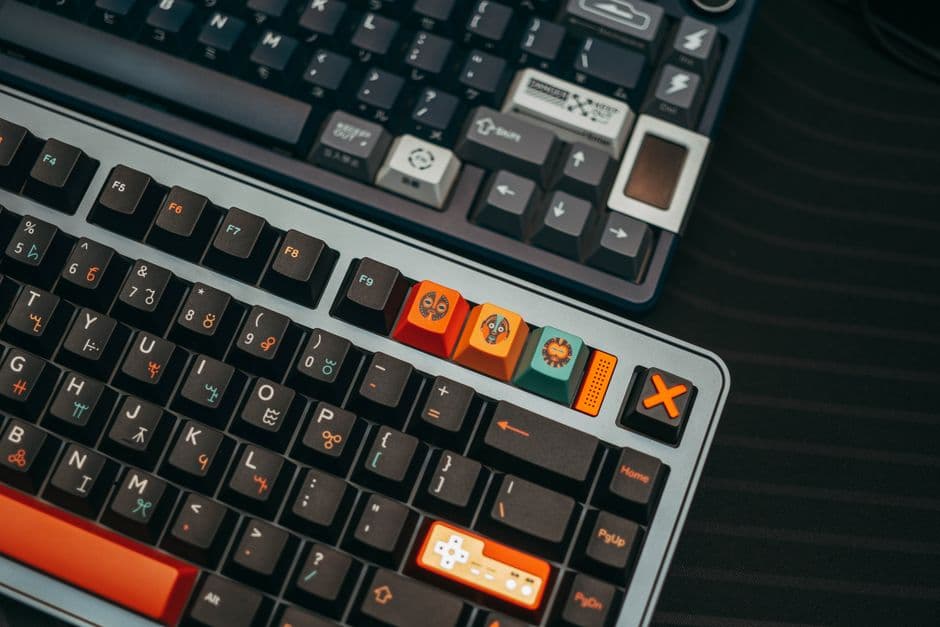
OpenAI’s new dedicated keyboard for AI agents is a masterclass in solutionism. Does your desktop really need more clutter just to watch software work?
I’ve spent the better part of two decades ripping open chassis and soldering pins, and if there is one lesson I’ve learned, it’s that a tool should solve a problem, not create a new one. When I heard OpenAI was entering the peripheral market with the Codex Micro, I expected something that justified its footprint on my desk. Instead, I got a light-up slab designed to "monitor agentic threads."
After spending a week with the device, the novelty wore off in about an hour, leaving me with a nagging question: Why do we need hardware to manage software that should be living in the background?
The RGB Distraction
The Codex Micro is essentially a mechanical keyboard with a dedicated OLED strip and a bank of macro keys specifically mapped to OpenAI’s agentic AI workflows. The idea is that instead of alt-tabbing to see what your AI agent is doing, you can glance down at your keyboard.
It sounds fine on paper, but in practice, it’s a constant, pulsing distraction. My workspace is built for focus—a clean monitor setup and a keyboard that does what I tell it to without asking for attention. Having a peripheral glow red or pulse blue because an agent is "thinking" is the hardware equivalent of a desktop notification that you can’t turn off.
It feels like a step backward. We spent years moving toward minimalist interfaces, trying to get the software out of our way so we could actually produce work. Now, we are being asked to buy hardware that turns our desk into a high-visibility alert center for AI activity.
A Case Study in Solutionism
The fundamental issue here is what Evgeny Morozov famously termed "solutionism"—the belief that every complex human or software problem can be solved by adding a shiny new piece of tech.
The task of monitoring an AI agent is a software UI problem. If I need to see what my agent is doing, that should be a HUD element, a secondary window, or even a small taskbar indicator that I can hide when I need to actually write code. By pushing this onto a physical keyboard, OpenAI is forcing me to pay for an expensive piece of hardware to patch a deficiency in their software design.
I’m reminded of the Stream Deck, which is useful because it allows for granular control over broadcast software and system shortcuts. But the Codex Micro isn't offering utility; it’s offering a tether. It’s an "agent monitor" that doesn't actually give me more control over the agent—it just gives me more ways to look at it.
The Boring Truth
I have always gravitated toward hardware that is "boring but reliable." Give me a Filco Majestouch or a standard HHKB that will last for a decade. Those tools disappear under your hands. They don't have proprietary firmware that might stop receiving updates in two years, and they certainly don't require their own dedicated software suite just to light up correctly.
The Codex Micro requires the OpenAI Control Hub to function fully. In my testing, that meant yet another background process consuming memory and checking for updates. Does it make my agent more efficient? No. Does it make the "agentic experience" better? Only if you enjoy watching a progress bar on a keyboard.
Is This Really the Future?
If the future of computing is hardware that constantly screams for attention, I’m not sure I’m interested. Hardware should be the invisible foundation of our digital lives. When a manufacturer makes a keyboard that is essentially a tethered status display for a LLM, they are prioritizing the brand's visibility over the user's workflow.
There is a place for innovation in peripherals, but this isn't it. Real innovation would be optimizing the AI models to work so cleanly within the existing OS that I don't feel the need to look at them at all.
I’ll keep the Codex Micro on my desk for another few days, but it’s already competing for space with a mug of coffee and a pile of spare SATA cables. Guess which one is getting the boot? If you’re looking to improve your workflow, invest in a better chair or a monitor arm that actually saves you some neck strain. Skip the AI-branded keyboard. Your desk, and your sanity, will thank you.