The Cloud-First Trap: Why the Plex Outage Should Terrify You
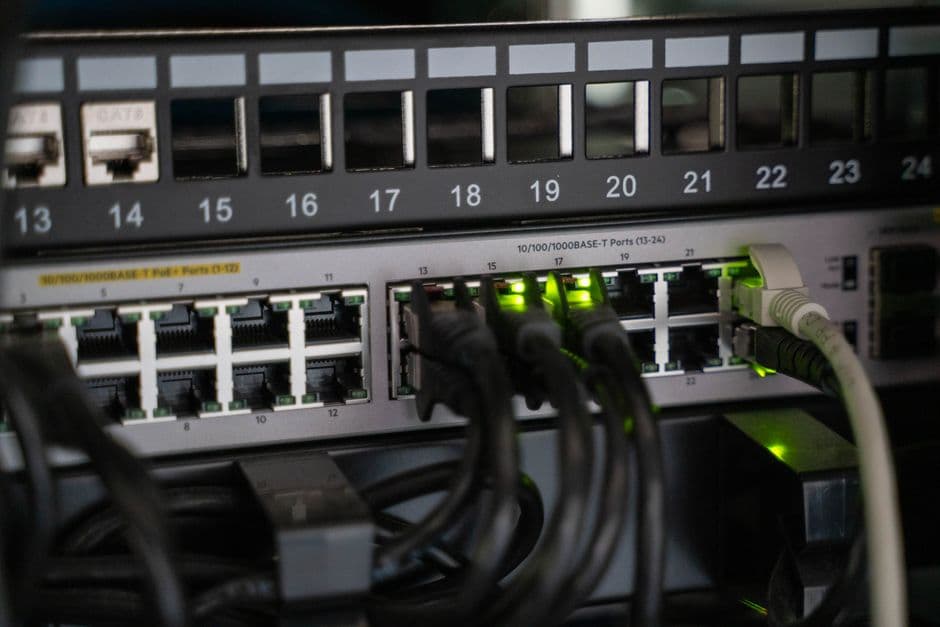
When your media server requires a cloud handshake just to play local files, you don't really own your media. The Plex outage was a reminder that convenience comes at the cost of control.
Last week, my living room went quiet. I sat down to watch a movie stored on my own hard drive, sitting in a box three feet away from my television, only to find the Plex interface spinning into an infinite loop. It wasn't a power failure or a corrupted file. Plex, the service that supposedly turns my home network into a private Netflix, had experienced a service disruption that prevented me from accessing my own content.
For most of us, this is the trade-off we accept for the "smart" home. We want the slick posters, the auto-synced watch history, and the ability to stream from our home servers to our phones while we’re on the bus. But when a cloud-based authentication check becomes the gatekeeper for local media, the definition of ownership starts to look a lot like a long-term rental agreement.
The Illusion of Local Media
The problem isn't that Plex isn't a good piece of software; it is arguably the gold standard for managing a home media library. The problem is the architectural shift that occurred as these platforms scaled. In the early days, media servers were largely local-first. You pointed the software at a folder, it scanned the files, and it played them.
Over time, that shifted. Platforms now require a constant, authenticated connection to a central server to manage user accounts, metadata, and even the basic act of logging into the app. When Plex acknowledged issues regarding their authentication services, the impact was immediate. If the server on the other end is down, your local hardware is effectively a very expensive brick.
We have spent years building systems designed for convenience, assuming that the internet—and the companies providing the glue for our tech stacks—will always be there to authorize our access. When that link breaks, we realize that we are merely guests in our own digital homes.
Beyond Media: The Smart Home Fragility
This isn't just about movies. Look at the broader ecosystem of "smart" devices. When a company changes its business model or decides to shut down a service, the hardware often follows. Consider the SmartThings hub legacy transition, where users were forced to migrate to new software platforms, or the Google Nest Secure discontinuation that left customers with hardware that effectively became dead weight.
When you buy a lightbulb, a thermostat, or a media server, you are often buying into a cloud dependency. If the company decides to push a breaking update or, worse, folds entirely, the features you relied on vanish. In my own setup, I have replaced several "smart" devices over the years simply because they became unsupported, despite the hardware being perfectly functional.
Reclaiming Control Without Sacrificing Sanity
Does this mean we should all throw our tech out the window and go back to physical media on a standalone player? Maybe not. But the Plex incident should be a wake-up call for how we prioritize our infrastructure.
If you are serious about owning your media, you need an off-ramp. If your primary media server depends on an internet handshake, keep a simple, offline-capable player—like a device running Kodi or even a basic VLC install on a laptop—as a backup. These tools don't care if the company’s servers are having a bad day. They treat your files like what they are: files, not a streaming service subscription.
We have become obsessed with the "it just works" promise of the cloud. But "it just works" is only true until it doesn't. If the experience of navigating your movie collection requires a signal to a data center in a different state, you aren't managing a home media server; you are just participating in a remote viewing program.
True ownership means being able to access your data when the internet is down, when the power is out, and when the company that sold you the software decides to move on to their next "pivotal" project. We shouldn't have to be network engineers to watch a movie we own, but if we don't start demanding local-first architecture from our tech manufacturers, we are only going to see more of these silent, frustrating outages.
The next time a service goes dark, don't just wait for the status page to flip to "Operational." Use the downtime to look at your setup and ask yourself: if this company disappeared tomorrow, would my home still work? If the answer is no, you don't own your smart home. You're just renting it.