The $379 OLED Dilemma: Why Your Monitor’s Finish Matters More Than Specs
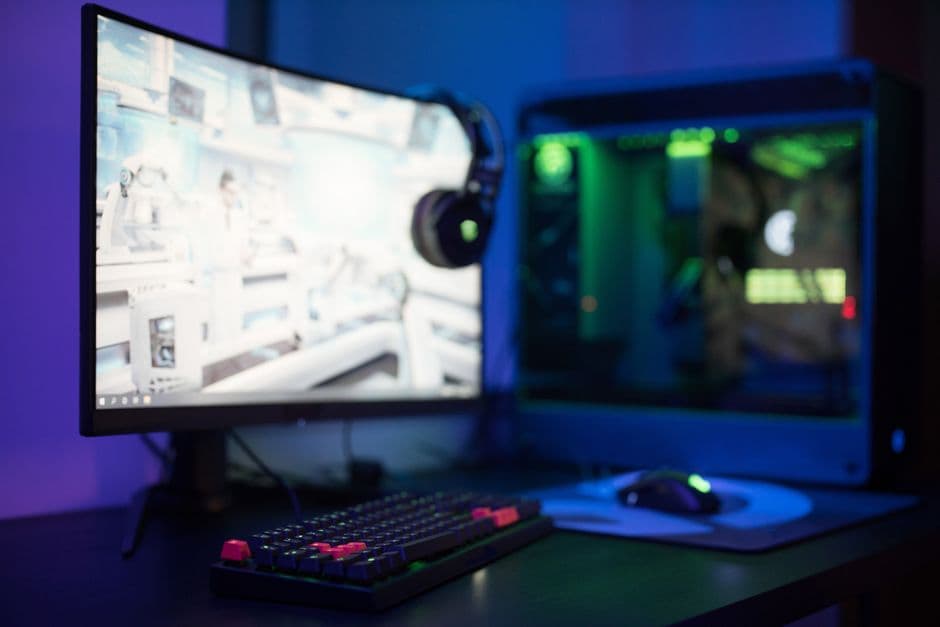
LG’s latest OLED price drop is a win for gamers, but don't let the marketing fool you. I’m breaking down why you should prioritize screen clarity over the "matte vs. glossy" debate.
I’ve spent the better part of three decades staring at screens. From the fuzzy scanlines of a CRT hooked up to my Sega Genesis to the aggressively over-sharpened 4K panels of the last few years, I’ve learned one consistent lesson: don't trust the marketing bullet points. When a spec sheet screams about "peak brightness" or "HDR performance," it’s often trying to distract you from the fact that the screen itself has been coated in a finish that sabotages the hardware.
The LG 27GS95QE-B dropping to a $379 price point is, on paper, a massive win for the industry. It brings OLED, with its near-infinite contrast and instant pixel response, down to the price of a mid-tier IPS display. But here is where we need to have a real talk about what you’re actually buying.
The "Anti-Glare" Trap
If you’ve been hunting for that perfect, glass-like glossy finish that makes colors pop, the LG 27GS95QE-B might feel like a letdown when it arrives on your desk. LG explicitly lists this unit with an "Anti-glare, Low reflection" coating. And honestly? It’s better than the old-school, sandpaper-like matte finishes of the mid-2010s, but it’s still not that crystal-clear glossy surface we’ve seen on premium panels.
Why does this matter? Because that coating is the difference between a window looking into a digital world and a piece of frosted glass. Manufacturers rely on these coatings to prevent the "reflections" that complainers hate, but in doing so, they kill the micro-contrast. When you’re playing a game with high-fidelity lighting—like the shadows in Alan Wake 2—that anti-glare layer scatters ambient light, turning your deep blacks into a milky, grayish "haze."
The Market Realities: LG vs. The Competition
If you are specifically chasing the pure, "wet-look" gloss, you’re looking at a different segment entirely. Take the Dell Alienware AW2725DF, for instance. It’s an incredible panel—often faster and sharper than the LG—but it comes with its own unique surface treatment. Some users swear by the QD-OLED vibrancy, but if you put it next to a truly glossy screen, you’ll see that the industry is still playing a balancing act between "usable in a room with a lightbulb" and "pure image quality."
If you’re coming from an older IPS panel, the LG 27GS95QE-B is still going to look like a revelation. The blacks are true, the motion is buttery smooth at 240Hz, and for $379, you are getting a top-tier OLED experience that makes 80-hour RPGs feel immersive in a way a standard LED never could. But don't go into this expecting the raw, mirror-finish glass found on high-end mobile devices or ultra-premium creative displays. You are choosing a balance of usability over raw, uninhibited contrast.
Why Contrast Beats Brightness
We live in an era where everyone is obsessed with nits. Manufacturers push "HDR peak brightness" numbers because they are easy to print on a box. But in a desktop environment, contrast is king. If you have a monitor that hits a massive number of nits but has a hazy, aggressive anti-glare layer, your effective contrast ratio tanks the moment there’s any ambient light in the room.
The LG’s approach is a pragmatic one. By opting for a lower-haze finish, they’ve managed to get closer to the ideal without making the monitor impossible to use in a room that isn't a pitch-black cave. The clarity is certainly better than the budget IPS or VA panels you’ll find on Amazon’s top-sellers list, but it’s not the end-all-be-all of clarity. It’s a great, aggressive "everyman" monitor.
The Trade-Off
Is this monitor worth the $379 price tag? Absolutely. It’s the most accessible entry point into high-refresh OLED gaming I’ve seen. But you have to be honest about your desk setup. If you have a massive window directly behind your chair, the anti-glare coating on this LG is going to work hard to save you—and it might just succeed where a glossy panel would fail.
We’ve reached a point where we don't have to compromise on the OLED tech itself to get into the ecosystem. But the "glossy vs. matte" debate is far from over. If you want the deepest blacks and the sharpest, most "in-your-face" visuals, you’re eventually going to have to graduate to a display that requires a light-controlled environment.
For everyone else? The LG 27GS95QE-B is the best place to start. It’s not perfect, and it’s not the "glossy holy grail" that some corners of the internet are dreaming of, but it’s a massive step forward for the average gamer. Stop chasing spec sheet numbers that don't translate to a better visual experience and start looking at how your monitor handles the room you actually live in. Your eyes—and your wallet—will thank you.