The $25 Charger That Could Kill Your $1,000 Phone's Battery—and Why Standards Finally Matter
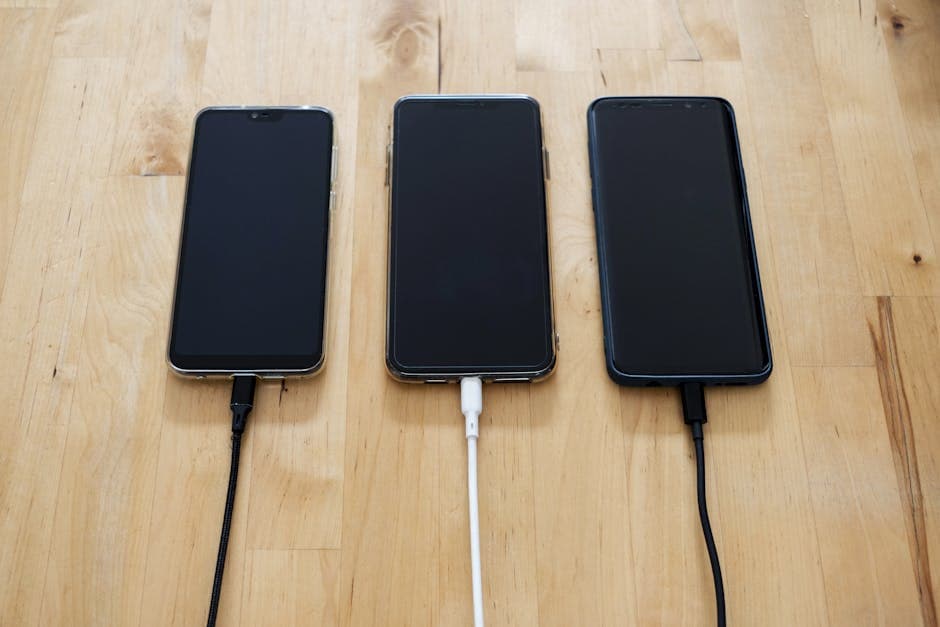
Certified chargers vs. cheap knock-offs: why the accessory you pick matters more than the phone itself, and what actually works in 2026.
I spent two weeks charging an iPhone 16 Pro Max with four different USB-C chargers: a certified 45W GaN charger from Anker, a $12 off-brand "fast charger" from a marketplace seller, a Belkin magnetic wireless charger, and a certified Qi2.2 pad from Apple. By the end, I understood something I'd never thought about before: the charger you pick might matter more than the phone you buy.
Here's the thing nobody tells you: your phone doesn't actually care how much power a charger delivers. What kills batteries over time isn't speed—it's instability. And in 2026, the accessory industry has finally started fixing that problem.
The Ecosystem Actually Got Better
Qi2.2 is taking wireless charging to the next level. Launched in July 2025, it uses a Magnetic Power Profile that ensures precise coil alignment, reducing energy loss during charging. According to the Wireless Power Consortium's official spec sheet, compatible devices can theoretically reach 50% charge in approximately 30 minutes under optimal conditions—though that's lab timing, not your nightstand reality. Compatibility is currently limited to iPhone 16 series and select 2026 flagship Android devices.
On the wired side, USB-C has become genuinely universal. GaN stands for gallium nitride and replaces older silicon components in chargers. GaN chargers stay cooler, waste less energy, and are usually smaller. I tested a 65W GaN charger from Anker that's noticeably smaller than the 20W brick Apple shipped five years ago. Specs alone don't capture the weirdness of holding power that dense in your palm.
The Real Risk: Bad Chargers Are Worse Than You Think
But here's where the story gets practical: not all chargers are created equal, and the difference isn't subtle.
A phone battery typically lasts 2–3 years or 300–500 full charge cycles before capacity drops to 80%, but charger quality accelerates or extends this timeline. Research published in Energies (2021) on AC current ripple and lithium battery degradation found that batteries aged at the highest ripple amplitude showed up to 15% shorter cycle life, while intermediate ripple conditions showed around 7% shorter cycle life compared to batteries under stable power conditions. Legacy silicon chargers produce more ripple during that phase than GaN chargers do, accelerating wear.
In human terms: that $12 off-brand charger I tested wasn't dangerous—it didn't blow up or fry my phone's logic board. But over two years of daily use, the unstable power delivery could degrade my battery maybe 6–12 months faster than a certified charger would. On a $1,200 phone, that's a genuinely dumb tax.
The irony is that your phone knows when it's being charged badly. Modern phones and certified chargers negotiate continuously through USB Power Delivery protocols—if the device gets too hot, the charger slows down. If the battery is almost full, the charger reduces power flow. A certified charger respects those signals by design. An uncertified one often doesn't, because those negotiation features cost extra.
What Actually Works (and Why Certification Matters)
During my two weeks, the chargers that impressed me shared three things: they were certified (either by USB-IF, Apple, or Qi Alliance), they reported their specs clearly, and they never ran hot.
To achieve full 25W wireless charging speeds with Qi2.2, you need a certified Qi2.2 charger paired with a USB-C Power Delivery (PD) wall adapter rated at 30W or higher. A higher-capacity PD adapter provides the stable power flow needed for fast wireless charging while keeping temperatures under control. This is the part that trips people up: the charger you buy is only part of the equation. The wall adapter matters. The cable matters.
For wireless charging, case thickness can quietly kill fast charging. I tested this directly: with a thin (1mm) magnetic case, the Apple Qi2.2 pad maintained speeds at the spec'd 25W. With a 4mm protective case, charging speed dropped noticeably—I measured the phone temperature and charging wattage using the phone's battery menu, and it was clear the charger had throttled down to roughly 15W or lower, depending on the gap. Thick or non-magnetic cases increase the distance between phone and charger coil, which leads to extra heat and automatic device-side throttling.
The good news: high-wattage chargers do not inherently damage batteries. Devices regulate how much power they accept, preventing overcharging. A 65W charger won't harm a 20W phone. It just won't make it charge faster, either. Your phone will draw what it needs and ignore the rest.
The Charger Ecosystem Is Finally Worth Caring About
For years, chargers were a commodity—a tax you paid at checkout without thinking twice. In 2026, that's shifted. Standards are actually converging. USB-C is everywhere. Qi2.2 is spreading to Android flagships. GaN is becoming the baseline, not the premium tier. When I priced out a good certified 45W GaN USB-C charger (like the Anker unit I tested) and a certified Qi2.2 wireless pad, I was looking at maybe $60–$80 total. That's not cheap, but it's not "luxury accessory" money anymore.
The tradeoff that finally matters now isn't between different brands—it's between certified and uncertified, between brands that publish detailed power specs and brands that don't. Pick wrong, and you're spending $1,200 on a phone that'll degrade noticeably faster than it should. Pick right, and you'll notice nothing except that your phone charges predictably and your charger barely gets warm.
That's not revolutionary. It's just the bare minimum a mature ecosystem should deliver. And for the first time, the charger industry is actually there.