The 1970s Government Program Behind Every GPU You've Ever Bought
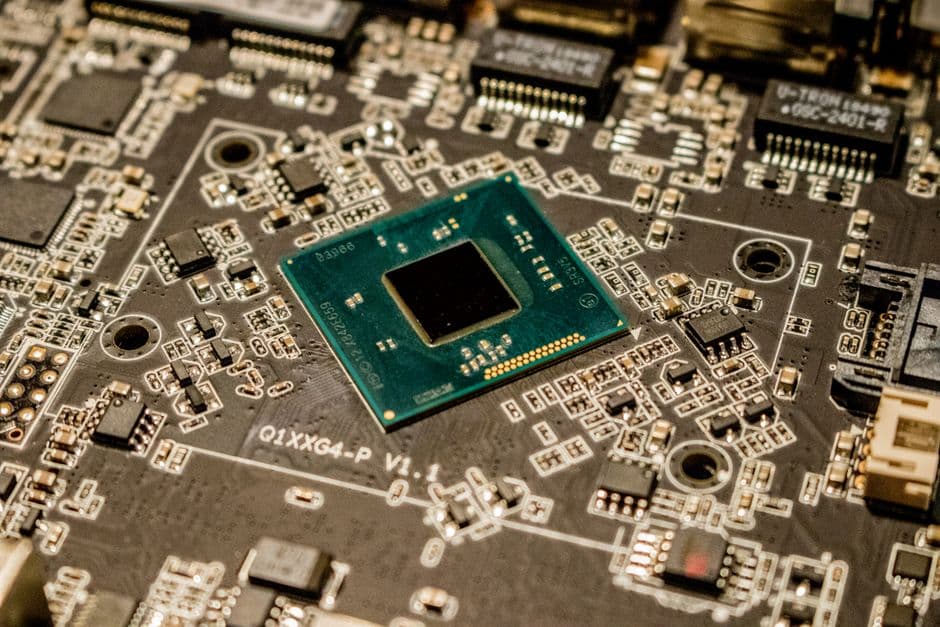
IEEE President Ray Liu's career traces back to Taiwan's state-backed semiconductor push — the same policy bet that eventually produced TSMC, the foundry making almost every GPU on your desk.
Open up whatever's running your GPU right now — an Nvidia card, an AMD card, even the chip inside your phone — and there's a decent chance it was physically manufactured in Taiwan, at a fab that exists because a government decided, decades before any of us were building PCs, that it should.
That's the thread IEEE Spectrum pulls on in its profile of Ray Liu, the current IEEE president, whose own path into electrical engineering runs straight through Taiwan's state-driven push into semiconductor manufacturing in the 1970s. It's a nice human-interest detail on its own — a kid growing up next to a national industrial project ends up spending his career in the field that project created. But it's also, if you actually sit with it, the origin story for the entire modern GPU market, including whatever markup you just paid on your last graphics card.
A government bet that took decades to pay off
Here's the part that doesn't usually make it into GPU reviews: Taiwan wasn't a chip powerhouse by accident or by market forces alone. In the 1970s, the government made a deliberate, state-funded bet on semiconductors as a strategic industry — building research institutes, sending engineers abroad to learn fabrication know-how, and importing manufacturing technology it didn't yet have domestically. It was industrial policy in the most literal sense: a small government deciding what its economy would be built on, and then subsidizing the education and infrastructure to make that true.
Ray Liu came up inside that environment, according to IEEE Spectrum, and it's part of why he ended up in electrical engineering rather than something else. That's a small, individual data point. But scale it up across an entire generation of engineers trained during that same push, and you get something much bigger: the talent base and manufacturing infrastructure that Taiwan's chip industry — and eventually TSMC — was built on.
Why this matters more than your last GPU purchase
If you've bought a graphics card in the last several years, you've felt the downstream effects of this policy whether you clocked it or not. TSMC doesn't design GPUs — Nvidia and AMD do that — but it fabricates the actual silicon for nearly all of them. When a new GPU generation slips, when prices jump, when supply is tight enough that a launch sells out in minutes, the bottleneck is very often sitting inside a Taiwanese fab, not in Santa Clara or Austin.
That's the uncomfortable dependency built into the whole PC building hobby: the fanciest architecture on a spec sheet is worthless without capacity at a foundry, and there are only a handful of foundries on Earth capable of producing chips at the process nodes modern GPUs need. Taiwan holds an outsized share of that capacity — not because of some inevitable law of economics, but because of a specific policy decision made by a specific government half a century ago, aimed at building exactly this kind of leverage.
The part build-culture readers usually skip
It's tempting to treat chip supply as a spec — a number on a datasheet, a die shrink, a clock speed. But the reason TSMC exists where it exists, and not somewhere else, is a policy story before it's an engineering story. The engineers who made the leap into semiconductors in Taiwan weren't reacting to a free market that happened to reward them; they were part of a state project that decided this was the industry worth betting the country's future on.
That's also why the current wave of CHIPS Act-style investment in U.S. and European fabs reads less like a bold new idea and more like other governments finally trying to copy Taiwan's homework, fifty years late. Building fab capacity isn't just capital — it's the kind of long-horizon talent pipeline Taiwan started cultivating back when GPUs weren't even a category yet.
What it means for the next GPU you buy
None of this changes what you should look for in a benchmark chart. But it's worth understanding why the chart exists at all, and why supply constraints keep showing up as a recurring character in every launch cycle. Every time a new GPU generation gets delayed or priced higher than expected, some of that story is architecture and demand — and some of it is a decades-old bet about where chip manufacturing capacity should live, made by people who'll never see the inside of a gaming rig.
Ray Liu's career is one small thread in that story — a kid who grew up around a national push into semiconductors and ended up leading the professional body that represents the field it created, per IEEE Spectrum. But the fab that decision helped build is still the reason your next GPU gets made where it gets made, and priced the way it's priced.