Tesla’s FSD Crash and the Myth of the ‘Responsible’ Override
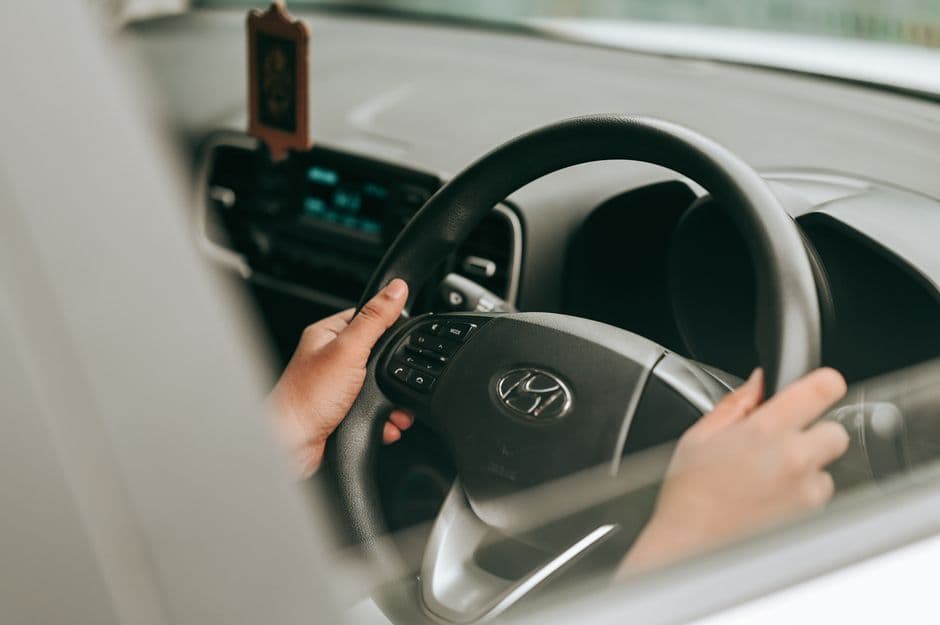
The NTSB suggests that Tesla's design blurs the line between human and machine, turning driver-assist software into a dangerous guessing game.
The most terrifying part of driving a modern car isn’t the speed or the complexity; it’s the transition. You’re cruising along, foot resting near the floor mat, letting the sensors handle the lane centering and the spacing, and then—for a split second—the system decides it’s done. Maybe it’s a faded lane marker, maybe it’s a weird reflection on the pavement. Whatever the reason, the car goes from being a chauffeur to a passenger in a millisecond.
When that happens, the burden of reality drops onto you like a lead weight. But according to the National Transportation Safety Board (NTSB), that shift is exactly where the engineering fails.
In their investigation into a 2022 Tesla crash in Texas, the NTSB pointed to a reality that most tech-forward car reviews gloss over: the human-machine interface is fundamentally broken (NTSB). When Tesla’s Full Self-Driving (FSD) system was engaged, the car accelerated into a collision. The system didn’t just fail to see the threat; it arguably encouraged the driver to keep their focus elsewhere. The NTSB noted that the design of the system, which allows the car to handle complex maneuvers while still labeling the driver as the primary operator, creates a "false sense of security" that effectively tricks the human brain into checking out (NTSB).
The Illusion of Control
We like to talk about "Level 2" autonomy as if it’s a partnership. In reality, it’s a hand-off game where the human is the designated fall guy. When you’re behind the wheel of an Ioniq or a Taycan using standard lane-keep assist, you feel the nudge. It’s transparent. But FSD and similar systems are designed to minimize that feeling, to make the steering inputs so smooth that you barely register them.
That smoothness is a trap.
The NTSB’s analysis of the Texas incident highlights that the car’s design permitted the driver to rely on the software even when the vehicle’s own sensors were struggling to parse the environment. By putting the responsibility on the human to intervene, yet designing an interface that encourages the human to stop paying attention, Tesla has built a system that punishes the user for trusting it.
The Reaction Time Trap
There is a physiological reality to driving that software engineers seem to ignore: reaction time is slow. If you are distracted, looking at a screen, or just zoning out because the car has been driving "perfectly" for thirty minutes, it takes time to re-orient yourself to the road.
The NTSB report underscores that even if a system alerts you to a failure, that alert is often too late to prevent an impact at highway speeds (NTSB). We aren't designed to monitor a machine for hours and then suddenly snap into an emergency racer mode because an algorithm encountered a software edge case.
When you drive a car manually, you are constantly processing the horizon, the vehicles ahead, and the road surface. You are building a mental model of the world. When you use FSD, you stop building that model. You shift from an active driver to a supervisor. But if the supervisor isn't actually watching, and the machine doesn't have a reliable way to make them watch, you aren't in a partnership. You’re in a vehicle that is essentially guessing, and you’re the one holding the bag when the guess is wrong.
Why Mid-Level Autonomy Needs a Rethink
I like tech. I like being able to keep my lane on a long, boring stretch of interstate. But the current marketing of these features as "Full Self-Driving" is a disservice to the actual physics of the road.
If a system needs a "responsible" driver to override it, it shouldn't be designed to make the driver feel like they are safely off-duty. We need systems that prioritize transparency over the illusion of magic. A system that tells me, "I’m having a hard time seeing the road lines here, take over," is infinitely better than one that stays silent until it suddenly disengages, leaving me to figure out why the car is suddenly veering toward the median.
The tragedy in Texas isn't just a failure of code or a failure of a driver. It’s a failure of expectation. We are being sold a version of the future where the car is a gadget you can ignore, but the hardware underneath is still subject to the same old, messy, unpredictable roads we’ve always driven on. Until the human-machine interface treats the driver like an active participant rather than a redundant backup, these crashes will keep happening. It’s time we stop pretending that "driver-assist" is a synonym for "self-driving." One is a tool for the road; the other is a marketing term that the laws of physics don't recognize.