Tesla Autopilot's Lethal Blind Spot: When Software Isn't Ready for Reality
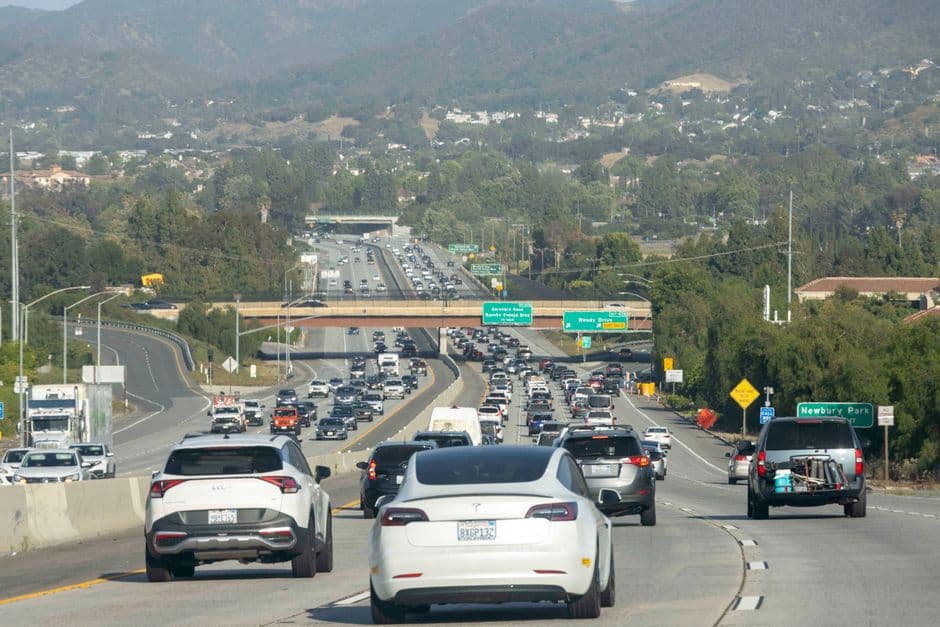
A fatal crash involving Tesla's Autopilot shines a harsh light on the limitations of driver-assistance systems, raising urgent questions about safety and the pace of autonomous driving development.
It’s easy to get swept up in the promise of self-driving cars. The idea of hands-off commutes, less stressful road trips, and improved safety is incredibly appealing. Tesla, with its ubiquitous presence and bold pronouncements, has been at the forefront of this technological race. But a recent tragic incident serves as a stark, sobering reminder: the complex reality of our roads can still outmaneuver even the most advanced software. When a Tesla Model S driver, relying on Autopilot, collided with a parked police car on a darkened highway in August 2022, resulting in the driver's death, it wasn't just an accident; it was a critical failure in the system's ability to perceive and react to its environment.
The National Transportation Safety Board (NTSB) investigation into that crash, and others like it, has been chipping away at the narrative of effortless autonomy. Their findings often point to a fundamental gap: advanced driver-assistance systems (ADAS), while sophisticated, are not yet equipped to handle the full spectrum of unexpected or nuanced situations that human drivers navigate daily. In this particular case, investigators found that the Tesla’s Autopilot system was engaged and that the driver had his hands off the wheel for an extended period. The system, which relies on cameras and sensors, failed to detect the stationary police vehicle in the dimly lit conditions, a scenario that a vigilant human driver likely would have spotted and reacted to.
This isn't about demonizing Tesla specifically, although their high-profile system inevitably draws the most scrutiny. It’s about the inherent challenges of translating complex, unpredictable real-world driving into lines of code and sensor inputs. Autopilot and similar systems, like Tesla’s Full Self-Driving (FSD) beta, are designed to assist, not fully replace, the driver. The nomenclature itself, however, can be misleading. "Autopilot" and "Full Self-Driving" suggest a level of capability that, at least in current iterations, doesn't quite match the names. This linguistic disconnect can lead drivers to overestimate the system's abilities, a phenomenon researchers have termed "automation complacency."
We've seen this play out before. The NTSB has investigated multiple Tesla crashes where Autopilot was engaged. In one prominent case from 2018, a software engineer was killed when his Tesla Model 3, using Autopilot, crashed into a highway barrier. The NTSB concluded that the driver had misused the Autopilot system, and that the system itself had limitations in detecting the barrier. More recently, in 2021, the NTSB reported on a fatal crash in Spring, Texas, where a Tesla Model S and a Model 3 crashed. Neither vehicle had anyone in the driver's seat, and both were operating with Autopilot engaged, according to investigators. The NTSB's preliminary findings indicated that the vehicles failed to navigate a curve, likely due to the system's inability to adequately manage the roadway's geometry.
These incidents aren't just statistics; they represent profound failures where technology, intended to enhance safety, tragically falls short. The core issue often boils down to the limitations of sensor suites and the algorithms that interpret their data. Cameras can be blinded by glare, fog, or darkness. Radar can struggle with stationary objects. Lidar, which some automakers use but Tesla eschews, can also have its limitations. Crucially, these systems often lack the contextual understanding that humans possess. They might recognize a shape, but do they understand what a police car with flashing lights at the side of the road means? Can they anticipate a child darting out from behind a parked car in a way a human instinctively can?
The debate over Tesla’s Autopilot and FSD isn't new, and it's intensified with each incident. Tesla CEO Elon Musk has consistently pushed back against criticisms, often attributing accidents to driver error or claiming that the systems are statistically safer than human drivers when viewed across millions of miles. While it’s true that human drivers are far from perfect, the nature of ADAS failures is different. When an ADAS fails, it can do so in ways that are surprising and counterintuitive to the driver, precisely because the driver is conditioned to expect the system to handle certain scenarios. The responsibility then becomes a complex interplay between the technology's design, the driver's adherence to its limitations, and the regulatory framework.
The implications for the future of autonomous driving are immense. We are in a transitional period, where vehicles offer more automation than ever before, but true Level 4 or Level 5 autonomy (where the vehicle can handle all driving tasks under specific or all conditions) remains elusive for mass-market production. Tesla's approach, focusing on camera-based systems and iterative software updates, has been ambitious. However, these fatal crashes underscore the critical need for robust validation, transparent communication about system capabilities, and perhaps a more cautious approach to marketing advanced systems.
As enthusiasts, we crave the future, the sleek designs, the cutting-edge tech. But for those of us who appreciate how cars actually work on the road – the feel of the steering, the predictability of the brakes, the subtle cues a driver picks up – these incidents are a wake-up call. The promise of autonomous driving is powerful, but it must be built on a foundation of irrefutable safety, not just impressive algorithms. Until ADAS can reliably handle the messy, unpredictable, and often dangerous complexities of the real world, the most critical component in any car will remain a fully engaged, attentive human driver. The goal isn't just to get from point A to point B, but to get there safely, and that’s a standard no software should be allowed to compromise.