Skydio's CEO on Drone Bans: Why 'Red Lines' Miss the Mark for U.S. Tech
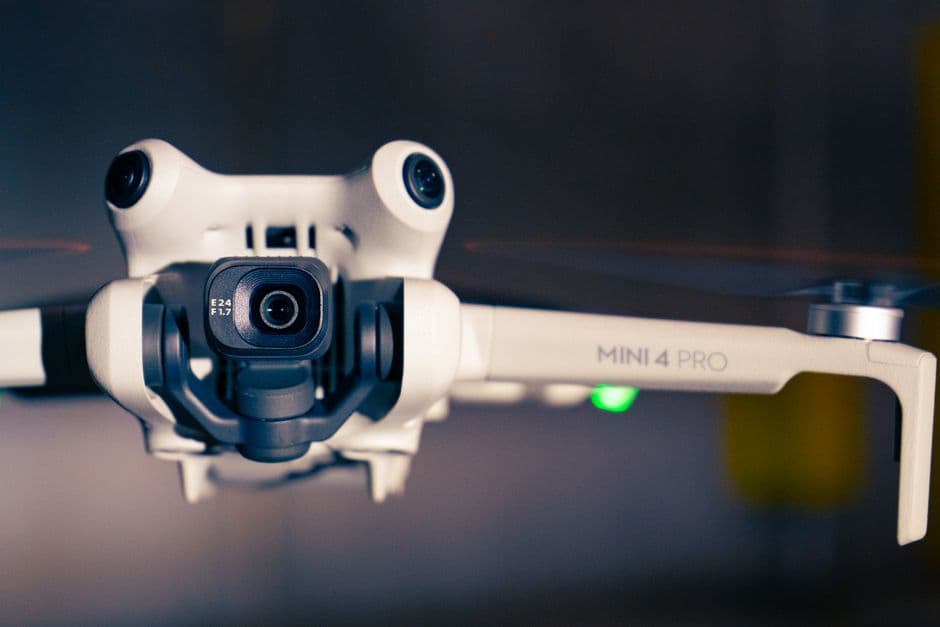
Skydio CEO Adam Bry pushes back against broad drone technology bans, arguing for innovation and a more strategic approach to national security instead of "red lines."
Adam Bry, the CEO of Skydio, a company that's been quietly making waves in the autonomous drone space, has a strong opinion about how the U.S. is approaching national security concerns tied to drone technology. And it’s not a popular one with everyone. He believes that drawing broad "red lines" around entire categories of drone technology, particularly those developed by specific countries, isn't the smart play. Instead, he's advocating for a more nuanced approach that prioritizes responsible innovation and addresses actual security risks rather than outright prohibitions.
This isn't just some abstract debate for Bry. Skydio itself has been a poster child for American drone innovation, especially in a market often dominated by Chinese manufacturers like DJI. Their drones are known for their advanced AI and autonomous capabilities, allowing them to fly complex missions with minimal human intervention. Think of it like the difference between a remote-controlled toy car and a self-driving vehicle – Skydio is pushing the latter, and Bry wants the U.S. to embrace that potential, not stifle it with blanket bans.
The core of Bry's argument, as he's articulated it in various forums, is that a sweeping ban on drones based on their country of origin, or even on specific components, misses the bigger picture. The concern, of course, is national security. We've seen worries raised about potential data privacy issues and the risk of espionage from drones operated by or manufactured in adversarial nations. These are legitimate concerns, no doubt. But Bry contends that these risks can be managed through targeted regulations and robust security protocols, not by throwing out the baby with the bathwater.
"The fundamental issue is that these broad restrictions don't actually address the underlying risks," Bry stated in a discussion with reporters, according to a report by The Wall Street Journal. He emphasizes that a more effective strategy involves focusing on the capabilities and security of specific drone systems, rather than making sweeping generalizations. This means evaluating individual drones and manufacturers based on their security practices, data handling protocols, and potential vulnerabilities, rather than simply imposing a blanket ban on all technology from a particular region.
This approach, Bry argues, allows for the continued development and deployment of critical drone technologies that can benefit American industries and public safety. Imagine police departments using advanced drones for search and rescue operations, infrastructure inspections being conducted with unparalleled efficiency, or even agricultural advancements powered by aerial data – all of which can be enhanced by sophisticated autonomous systems. If the U.S. simply shuts the door on entire technological avenues, it risks falling behind in areas where these tools could provide a significant advantage.
Bry's stance isn't about ignoring security risks; it’s about how to confront them intelligently. He suggests that the U.S. should focus on building its own domestic drone industry, fostering innovation, and establishing clear security standards that all drones operating within the country must meet. This could involve rigorous testing, certification processes, and strong data encryption requirements. It’s a strategy that aims to build trust and ensure safety through diligent oversight, rather than through the blunt instrument of a ban.
Consider the analogy of consumer electronics. We don't ban all smartphones because some might have potential security vulnerabilities. Instead, we rely on manufacturers to implement security features, operating systems get patched, and users are educated about best practices. While drone technology, especially for sensitive applications, requires a higher level of scrutiny, the principle of addressing risks through technical solutions and regulation, rather than outright prohibition, holds true.
The industry is at a fascinating juncture. Autonomous systems are rapidly evolving, and drones are at the forefront of this revolution. Skydio, with its focus on AI-driven flight and obstacle avoidance, represents a significant leap forward in what drones can do. They’ve built systems that can autonomously navigate complex environments, making them incredibly versatile for everything from filmmaking to industrial inspection. This kind of innovation is precisely what Bry fears will be stifled by overly broad restrictions.
Bry's vision for the future involves a competitive domestic market where American companies can thrive, unburdened by policies that inadvertently protect less innovative foreign competitors. It’s about creating an environment where companies like Skydio can continue to push the boundaries of what autonomous flight can achieve, developing technologies that enhance security and productivity without creating new vulnerabilities.
The "red lines" Bry refers to are often discussed in the context of national security directives that could limit the procurement and use of drones based on their origin. While the intention is clearly to safeguard national interests, Bry believes these broad strokes can lead to unintended consequences, hindering technological progress and potentially weakening the U.S. position in a rapidly advancing global market.
Ultimately, Adam Bry’s message is one of proactive engagement and intelligent policy-making. He’s not asking for a free-for-all; he’s asking for a smarter way to manage risk. It’s a call for the U.S. to embrace innovation, build robust domestic capabilities, and implement targeted security measures that protect national interests without sacrificing the immense potential of autonomous drone technology. It’s a complex challenge, but one that Bry clearly believes is solvable through thoughtful strategy rather than broad-brush bans. The question is whether policymakers will listen.