Rocket Lab's 17-Hour Launch: Is On-Demand Space Really For Everyone?
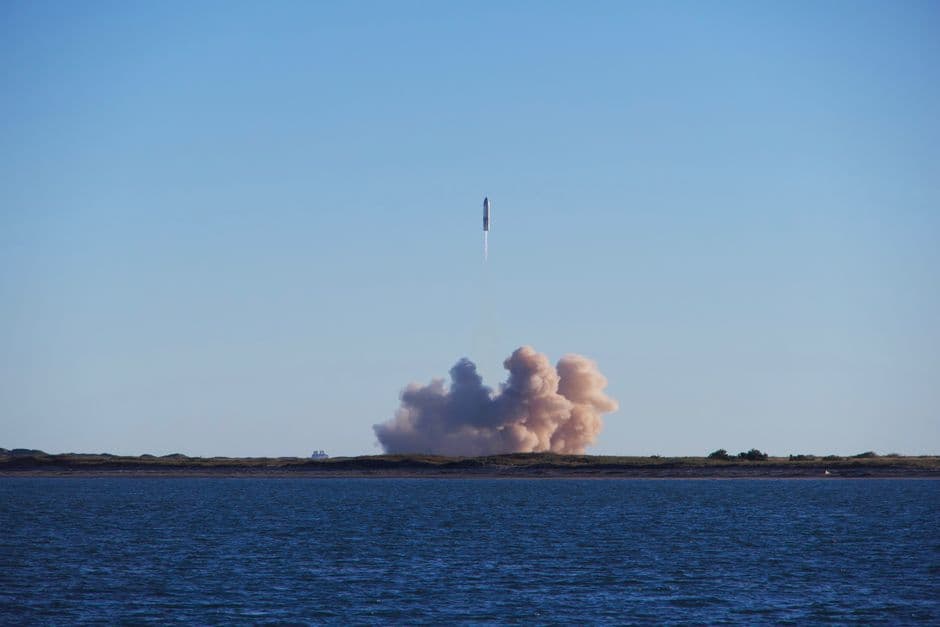
Rocket Lab's record launch speed signals a new era of rapid space access. But who truly benefits from this speed – and what's the cost?
It’s easy to get caught up in the sheer spectacle of a rocket launch. The fire, the rumble, the physics-defying ascent into the black. But the real headline from Rocket Lab’s recent mission isn't just that they got something into orbit; it's how fast they did it. Seventeen hours. From the time a U.S. Space Force satellite was handed over to Rocket Lab to its deployment in orbit, less than a day had passed. That’s not just quick; it’s a fundamental shift in how we think about getting things into space.
For decades, launching a satellite was an exercise in patience. You booked your spot on a launch vehicle, which often meant months, if not years, of waiting for the right window, the right payload integration, and the right slot on a manifest dominated by larger, established players. Rocket Lab's Electron rocket, however, is built for a different kind of customer. This 17-hour turnaround for a Space Force mission, reported by SpaceNews, isn't an isolated fluke. It signifies the maturation of a capability: on-demand space access.
Think of it like this: historically, launching a satellite was akin to booking a flight on a major international airline. You plan way in advance, you coordinate with dozens of other passengers, and your schedule is dictated by the airline's. Rocket Lab, and companies like it, are becoming the private jet of spaceflight. You have a specific, urgent need, and they can accommodate it with remarkable speed.
So, who’s this speed really for? The most immediate beneficiaries are clear: government agencies, particularly defense and intelligence operations. The U.S. Space Force mission that benefited from this rapid launch is a prime example. In a rapidly evolving geopolitical landscape, the ability to quickly deploy a new satellite, or replace a lost one, can have significant strategic implications. If a vital reconnaissance or communication satellite is lost, or if new capabilities are needed urgently, waiting months for a launch slot is simply not an option. This on-demand model offers a crucial advantage in agility.
Beyond the military, commercial entities stand to gain significantly. Companies reliant on satellite data for earth observation, communication services, or navigation are increasingly requiring more frequent and tailored launches. Imagine a company that has just developed a groundbreaking new sensor package or needs to replenish a constellation of satellites in orbit due to degradation. The ability to launch on demand means less downtime, faster innovation cycles, and a quicker return on investment. It democratizes space access, lowering the barrier for businesses that previously couldn't justify the long lead times and high costs associated with traditional launch services.
However, this speed and flexibility don't come without trade-offs. Rocket Lab's Electron rocket, while capable and now proven in rapid turnaround, is a smaller launch vehicle. It’s designed for small satellites, typically weighing up to around 300 kilograms. This means it’s not suitable for the massive geostationary satellites that power traditional broadcasting or the large components needed for ambitious space infrastructure projects. The 17-hour launch demonstrates an impressive operational capability, but the payload capacity remains a defining characteristic.
Furthermore, the cost factor, while not explicitly detailed in the context of this rapid mission, is always a consideration. While Rocket Lab aims to make space access more affordable, “on-demand” often comes with a premium. Companies that can afford to pay for that immediate deployment capability will benefit most. It’s a scenario that could widen the gap between well-funded organizations and those with more limited budgets, potentially creating a tiered system of space access. Will the urgency of a particular mission justify the potentially higher price tag for speed? That’s a calculation many will have to make.
There’s also the question of the supply chain and manufacturing infrastructure required to support such rapid launch cadences. Rocket Lab has clearly invested heavily in making this possible, but scaling these operations globally, to accommodate a wider range of customers and launch vehicles, presents significant logistical challenges. It requires not just rockets that can launch quickly, but also the factories, the ground support, and the skilled personnel to keep pace.
The successful, rapid launch of this Space Force satellite by Rocket Lab is a powerful testament to the progress in commercial spaceflight. It’s undeniably exciting to see space become more accessible and responsive. But as we celebrate this milestone, it’s crucial to look beyond the rocket’s roar and consider who truly benefits from this new era of on-demand space access, and what the inherent costs and limitations might be. The future of space is here, and it's arriving faster than ever. The question is, are we all strapped in for the ride?