RingConn's Lord of the Rings Tie-In: Middle-earth Meets the Modern Wearable?
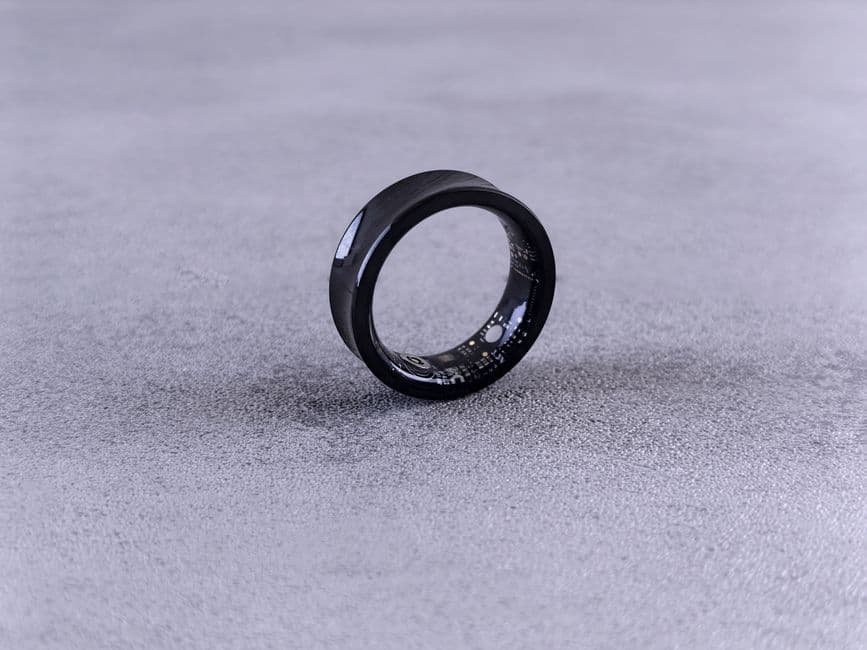
RingConn is betting big on 'Lord of the Rings' lore for its smart rings. Is this a stroke of genius to capture attention in a new market, or just hobbit-forming marketing?
Let’s be honest, the smart ring market is still a bit of a wild west. We’ve got Oura pushing sleep and recovery, Ultrahuman focusing on metabolic health, and then there’s RingConn, a newer player trying to find its footing. Their latest strategy? A deep dive into J.R.R. Tolkien’s Middle-earth. I’ve spent the last two weeks with the RingConn smart ring, trying to figure out if this crossover is a genuinely inspired way to connect with users, or if it’s just a desperate Hail Mary in a crowded, albeit niche, space.
The idea itself is… bold. RingConn has themed its app, its packaging, and even some of its marketing materials around the iconic lore of 'Lord of the Rings.' Think Elvish script on the charger, or app notifications that sound like they’re straight out of Rivendell. On one hand, it’s a fascinating attempt to create an emotional connection with a product that, let’s face it, often boils down to data points. The smart ring’s core function is to track your sleep, heart rate, and activity. How do you make that exciting? Perhaps by associating it with a world that’s all about journeys, quests, and the strength of the individual.
I’ve always been skeptical of marketing that feels too… forced. When I unboxed the RingConn, the 'Lord of the Rings' theming was certainly noticeable. The packaging had a certain rustic, almost ancient feel to it, a stark contrast to the sleek, minimalist design of the ring itself. The app, which is where you’ll spend most of your time interacting with the ring’s data, has subtle nods to the lore, like specific icons or terminology that Tolkien fans will recognize. For someone like me, who appreciates a well-executed theme but isn’t a die-hard lore aficionado, it felt like an interesting, albeit slightly quirky, addition.
The real test, though, isn’t the packaging or the app’s aesthetic. It’s whether the ring actually does what it’s supposed to do, and whether this unique marketing angle helps people understand what it’s supposed to do. The RingConn ring, which I wore continuously for two weeks, offers a suite of health tracking features. It monitors sleep stages (deep, light, REM), heart rate variability (HRV), body temperature, and blood oxygen levels (SpO2). It also tracks daily activity, including steps and calories burned.
Where RingConn attempts to tie this into their 'Lord of the Rings' theme is by framing these metrics as aspects of your personal “quest” or “journey” towards better health. Your sleep score might be presented as your “rest for the journey ahead,” or your HRV as an indicator of your body’s readiness for the day’s challenges. For a certain demographic – those who are already fans of 'Lord of the Rings' and are looking for a smart ring – this could be a really effective way to make the data feel more personal and engaging. It taps into a sense of adventure and personal growth that the books and films champion.
However, for the average consumer who might be looking for a straightforward health tracker, this could be a distraction. Does knowing that your deep sleep is being framed as 'preparation for the Mines of Moria' actually help you improve your sleep? Probably not directly. But it might make you think about your sleep more, and in a market where attention is currency, that’s a win.
One of the key challenges for smart rings is explaining the why behind the data. It’s not just about seeing a number; it’s about understanding what that number means for your well-being. RingConn’s approach tries to contextualize this data within a narrative framework. Instead of just showing you a low HRV, they might frame it as your “endurance waning,” prompting you to consider rest or stress management. This narrative layer, while potentially alienating to some, could be precisely what draws others in, giving the data a more tangible, story-driven significance.
Looking at the competitive landscape, smart rings are still relatively new. While Oura has carved out a significant niche, and Apple’s rumored entry looms large, there’s still plenty of room for innovation and differentiation. RingConn’s 'Lord of the Rings' tie-in is certainly memorable. In a world of generic black bands and interchangeable app interfaces, it stands out. Whether that distinction translates into sustained market success remains to be seen, but it’s a strategy that acknowledges the human desire for connection and narrative, even in our technology.
My personal take? The RingConn ring itself is a solid performer. The sleep tracking felt accurate, aligning with my subjective experience. The HRV and temperature readings provided interesting insights that I could correlate with my daily stress levels and activity. The battery life was also impressive, lasting several days on a single charge, which is crucial for a device you wear 24/7. The app, while themed, is generally intuitive enough to navigate, even if you’re not quoting Gandalf.
The 'Lord of the Rings' element is, for me, a bit of a mixed bag. It’s undeniably creative and could be a powerful hook for the right audience. It adds a layer of personality to a device that could otherwise feel sterile. If you’re a fan of the books and films, this is likely to resonate deeply. If you’re not, it might just be a curious quirk. But in the nascent smart ring market, being curious might be enough to get people to pay attention. RingConn isn't just selling a piece of tech; they're trying to sell an experience, a connection to a beloved story, and perhaps, a more engaging path to understanding your own body. It's a gamble, sure, but in the world of wearables, sometimes a little bit of fantasy is exactly what you need to make reality a little more compelling.