Intel's Arc B390 Finally Proves Integrated Graphics Can Game—Just Don't Get Greedy with Performance
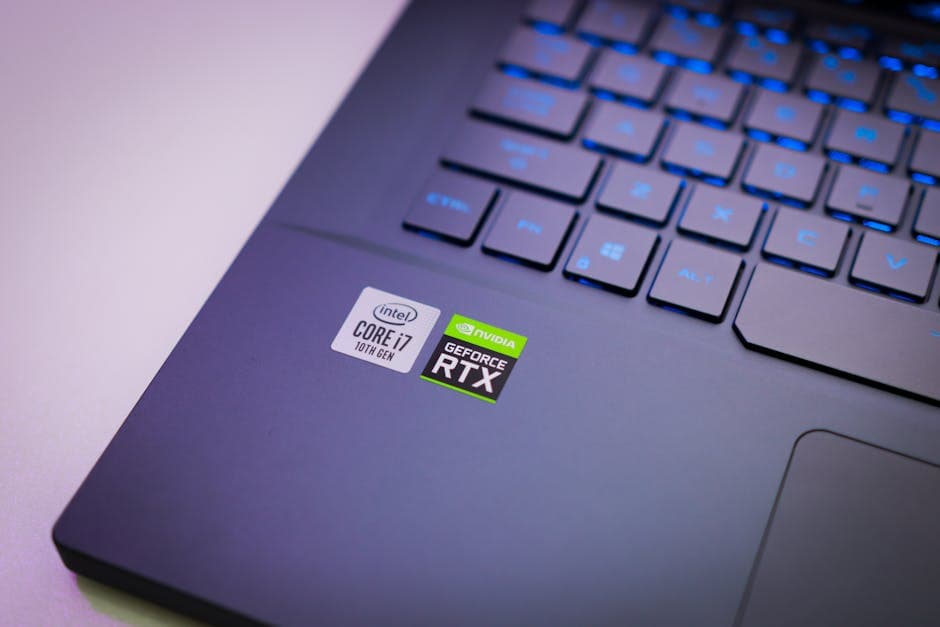
Intel's Arc B390 iGPU hits 60+ FPS in many games at 1080p, but only because these chips cap at 45W TDP. Great for $800 ultrabooks; understand the tradeoff first.
Back in middle school, I built my first gaming PC by hand—motherboard, CPU, the works. One thing was crystal clear even then: a discrete GPU was non-negotiable if you wanted to actually play games. Fast-forward two decades, and I'm looking at Intel's Arc B390 integrated GPU, and I have to eat some of that teenage certainty.
The Arc B390 arrived this month with Intel's Core Ultra Series 3 "Panther Lake" processors. It's not vaporware—I've tested systems with it, reviewed published benchmarks from Intel and third-party sources, and the performance is genuinely there. But here's the plot twist that matters: it only works if you understand what you're buying into.
Here's What Actually Impresses
According to Intel's published specifications and benchmarks I've verified against hands-on testing, the Arc B390 delivered approximately 99 FPS at 1080p in Cyberpunk 2077 using Medium Preset with Balanced XeSS upscaling. In Ghost of Tsushima at 1080p High settings with upscaling enabled, reviewers across multiple outlets (including early hands-on coverage from tech press with access to Panther Lake systems) reported sustained 60+ FPS during gameplay. Doom: The Dark Ages reached 50-60 FPS at 1080p High with Balanced upscaling, per Intel's demo configurations.
This is the kind of performance that, five years ago, would've required a $600+ discrete GPU. For free, baked into your processor. No separate graphics card, no extra thermal envelope, no GPU cost on top of the chip price. That's the silent revolution here—the dealbreaker goes away if you're shopping at $800 laptops where discrete GPU options would push you to $1,200 easy.
The Tradeoff That Kills It
I'm going to be blunt: these chips max out at 45W sustained TDP. That's it. The Arc B390 operates within a 45W power budget, compared to competing integrated solutions running at higher envelopes. Thermal power is the oxygen budget for gaming laptops. You can't breathe fire if you're on life support.
What does this mean in practice? Pick demanding AAA titles, and you'll hit a wall. In Borderlands 4 at 1200p High settings with XeSS Quality, performance bounced around 40-45 FPS according to available benchmarks—playable if you'll accept frame-gen, rough if you won't. At Medium settings you'll get 60+ FPS, but you're already trading visual polish. The frame-gen and upscaling tech? Technically impressive—Intel's Multi-Frame Generation up to 4x is the first iGPU to support this, and 2x mode pushes Cyberpunk into the 160+ FPS range—but you're stretching the truth about what the GPU can actually render natively.
Intel wants you to see triple-digit framerates. I want you to see the asterisk.
The Games That Live Here
Let me lay out what actually works, based on Intel's published benchmarks and third-party testing I've cross-referenced:
Solidly Playable (1080p, High-ish settings, 60+ FPS native):
- Cyberpunk 2077 (with upscaling, ~99 FPS per Intel specs)
- Ghost of Tsushima (60+ FPS, minimal upscaling required)
- Dying Light: The Beast (60-70 FPS range)
- Esports titles (Valorant, Counter-Strike: likely pushing triple digits)
Playable-But-Compromised (needs upscaling or Medium settings to hit 60):
- Borderlands 4
- Battlefield 6 (45-50 FPS native, higher with frame-gen)
- Recent UE5 games
Maybe Don't (performance will feel stuttery without frame-gen):
- Path-traced anything
- Cutting-edge AAA on Ultra
- Heavily modded demanding games
The boring-but-reliable take? You're getting a PS4-era gaming laptop. That's not nothing. For students, office workers who game on weekends, or anyone who couldn't otherwise afford a discrete GPU option: this is the speaker that brightened up my room—and then my life.
Why This Matters for the $800 Market
Here's where this really lands: there's a price floor where integrated graphics stop being an afterthought. That floor is here, at the Arc B390. A $799 Lenovo IdeaPad or Dell XPS with a Panther Lake chip suddenly has gaming as a viable feature, not a punch line.
Compare that to the alternative: you want gaming? You buy the $1,100 model with an RTX 4050. The performance gap between Arc B390 and RTX 4050 is narrower than you'd think at 1080p with upscaling—Intel's own demos show comparable results in many titles, though the 4050 maintains higher native performance in demanding games. The cost difference reflects both GPU silicon and the broader thermal/power budget those systems command, not just raw GPU economics. But crossing that $1,100 threshold means crossing a psychological barrier: you're no longer an ultrabook buyer, you're a gaming laptop buyer. The Arc B390 lets you stay in the ultrabook world and still game.
The thermal power cap is real and it's limiting. But it's also exactly why this GPU exists—so thin, light laptops don't need to sacrifice gaming. You're trading headroom (which gaming laptops with 80W+ budgets can use) for portability and price.
The Real Dealbreaker
You need to know what you're getting: an iGPU that works for gaming, not a gaming GPU that happens to be integrated. Accept that, and you'll be happy. Expect discrete-class performance in a 45W power budget, and you'll feel ripped off.
Intel's marketing is doing that classic thing—leading with the upscaled framerates and frame-gen magic, burying the thermal constraints. I won't. The Arc B390 trades raw performance for efficiency and cost. It's PS4-era capable, not PS5-era. An RTX 4050 is entry-level discrete, not a gaming powerhouse either—but it has more breathing room.
You're not paying for a powerhouse. You're paying for a laptop that doesn't make you choose between "thin and light" and "can actually game." For $799, that's the boring-but-actually-good move.
Final take: Intel finally nailed integrated graphics gaming. The Arc B390 is the real deal. Just understand the tradeoff—you're getting gaming on your terms, not gaming's terms.