Integrated GPU Wars Are Actually Back: AMD's Strix Halo Finally Makes iGPU Gaming Real
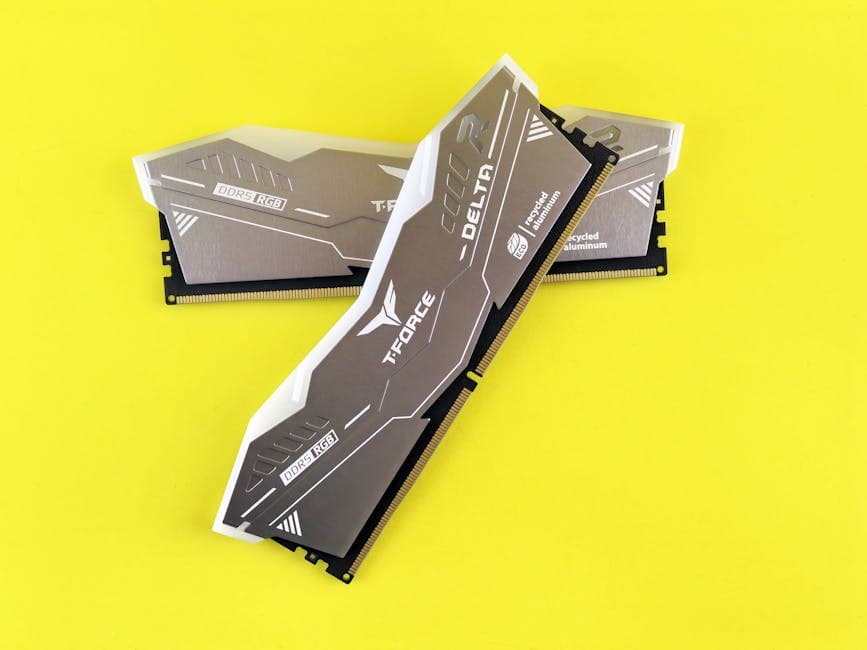
AMD's Strix Halo finally puts integrated graphics on par with RTX 4060, but the real win is its unified memory architecture—up to 96GB GPU access changes the game for creators.
About fifteen years ago, integrated graphics were a punchline. If you wanted to game on a laptop, you needed a discrete GPU—full stop. But something unexpected just happened: AMD's Strix Halo Radeon 8060S scored 10,106 points in 3DMark's Time Spy benchmark, almost matching Nvidia's RTX 4060 laptop. That's not a typo. That's not marketing fluff. An integrated GPU just pulled within arm's reach of a dedicated one.
I've been building PCs since middle school, and I've watched GPU technology for two decades. The last time I got genuinely surprised by an integrated graphics announcement was... never, actually. So when I started digging into Strix Halo's specs, I wanted to understand what made this different. The answer turned out to be weirder and more interesting than raw compute power.
The Benchmark Verdict (But Read the Fine Print)
Let's get the headline out of the way: AMD's Strix Halo integrated graphics can go toe-to-toe with a laptop Nvidia GeForce RTX 4060. In Geekbench Vulkan tests, the new AMD chip ranks at 67,004 points, and the RTX 4060 at 63,264. In gaming benchmarks, the chip's integrated Radeon 8060S iGPU was able to provide butter-smooth 1080p performance in all the games tested—including demanding titles. At the high preset with high crowds enabled and high textures enabled, the integrated 8060S achieved 67FPS average in Cyberpunk 2077.
But here's where the story gets more complicated, and why this is actually important: Those RTX 4060 comparisons only matter if you understand what's fundamentally different about how Strix Halo works.
The Real Innovation: Memory Architecture
This is the part that doesn't fit in a benchmark headline but changes everything.
Strix Halo combines 16 Zen 5 CPU cores with a powerful integrated GPU branded as Radeon 8060S based on the RDNA 3.5 architecture offering 40 compute units and supports up to 128 GB of LPDDR5X memory. That's not unusual on paper. But here's the trick: Unlike a discrete GPU with its own dedicated VRAM chips, Strix Halo uses a unified memory architecture (UMA). Your 128GB of DDR5 serves both the CPU and the integrated Radeon 8060S GPU.
Why does this matter? Because if you have 128GB of total system memory, up to 96GB can be allocated to the GPU alone, with the remaining 32GB dedicated to the CPU. However, the GPU can still read from the entire 128 GB memory, thus eliminating costly memory copies via its unified coherent memory architecture. On a discrete RTX 4060, you've got 8GB of dedicated GDDR6 memory. Full stop. On Strix Halo, the GPU can grab nearly 100x that if it needs it, with almost no latency penalty.
That's a fundamental tradeoff you need to understand before buying. It's not faster in every way—the Ryzen Max+ 395's default TDP is 55W, but the cTDP can scale up to 120W for both CPU and GPU combined. Cooling is inevitably more constrained than on a standard gaming laptop. The RTX 4060, by contrast, comes in a 15-inch chassis with more airflow and higher possible power draw. The NVIDIA GPU in a thicker system can maintain higher clocks for sustained periods, while AMD's integrated approach has to remain efficient within a narrower power envelope. But for creators working with large models, video files, or datasets, that unified memory architecture is genuinely revolutionary.
Why This Matters for Laptops (And Handhelds)
Let me be direct: the gaming angle is real but maybe not the most important story here.
These APUs are designed primarily for premium laptops and mobile workstations, emphasizing exceptional integrated graphics performance that substantially surpasses previous generations such as the Radeon 780M and is capable of handling demanding tasks without a discrete GPU. If you're a content creator, video editor, or 3D artist who's been dragging an RTX 4060 laptop around and paying the thickness and weight tax for it, Strix Halo changes your math. You get comparable gaming and GPU performance, but you're not paying for a separate VRAM subsystem. That translates to thinner, lighter laptops with longer battery life.
The 8060S features 40 CUs and 2,560 shader cores – more CUs than a vanilla PlayStation 5, and 16 Zen 5 CPU cores paired to a huge (for a mobile APU) 256-bit interface with fast LPDDR5X memory. For handheld gaming PCs especially, that's a quantum leap. You're looking at Time Spy graphics performance of 9,680 points, within spitting distance of the record set by the RTX 4060—in something you can hold in your hands.
The Catch (And Why You Should Care)
Here's the part where I'm supposed to tell you whether to buy it, and I'm going to be boring about it: it depends on what you actually do.
If you game at 1440p or higher and want the absolute highest framerates, you're still better off with a discrete RTX 4070 or 5070 laptop. Strix Halo is the reliable option, not the flashy one.
But if you're a creator who wants to eliminate the discrete GPU entirely and free up space and power for better thermals and thinner chassis, or if you game mostly at 1080p and want integrated graphics that actually doesn't suck, Strix Halo is worth the premium over last-gen APUs. AMD bills it as the fastest integrated graphics available in the Windows ecosystem courtesy of a new disruptive integrated memory architecture that unlocks new capabilities and a beastly 40-core RDNA 3.5 integrated GPU. They're not wrong.
The integrated GPU wars aren't back because iGPUs beat discrete GPUs across the board. They're back because Strix Halo proved integrated graphics don't have to suck, and that unified memory architecture opens new doors that benchmarks alone don't capture. For mid-range creators and 1080p gaming laptops, this rewrites the value equation.