Humanoid Robots Take on Surgery: Precision Tool or High-Tech Hype?
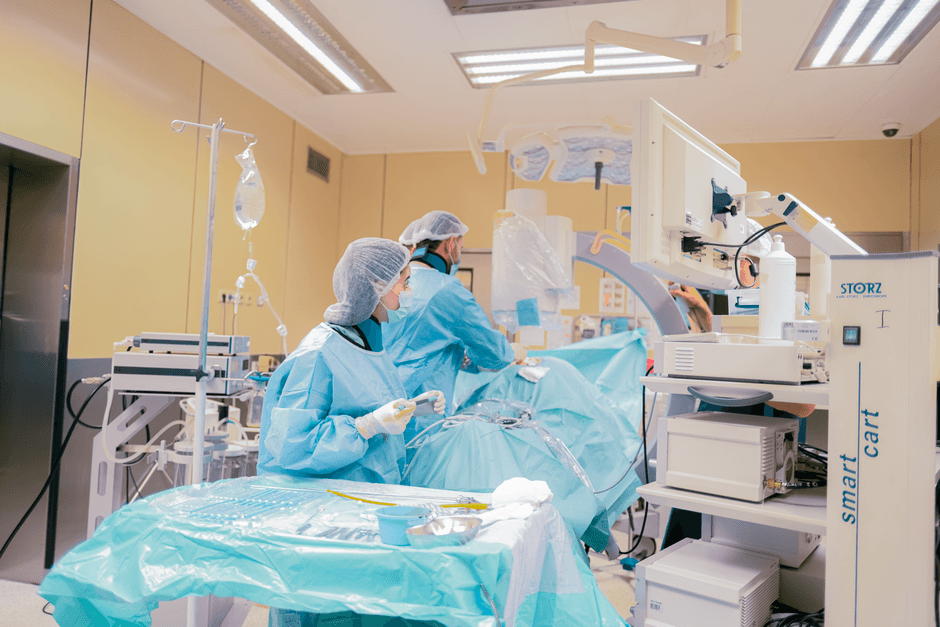
Preclinical trials show humanoid robots assisting surgeons in complex procedures. Could this AI-powered future enhance medical precision and access, or is it another tech marvel that won't quite stick the landing?
When I first heard about humanoid robots performing surgery, my mind immediately flashed to those early 3D platformers where the controls were clunky, the hitboxes were wonky, and you spent more time fighting the camera than the enemies. It’s easy to dismiss technological leaps as just more hype. But this latest development in surgical robotics, moving from remote-controlled arms to something that looks and moves like a human surgeon, has me genuinely curious. A preclinical trial, recently detailed in a study, saw these advanced robots assisting surgeons in operations on live pigs. The results? They're intriguing enough to suggest we might be on the cusp of a significant shift in how medical procedures are conducted.
The idea isn't to replace surgeons with autonomous machines. Instead, it’s about augmenting their skills with tools that offer a level of precision and control beyond human hands alone. Think of it like a legendary speedrunner using a perfectly tuned controller for a flawless run, but applied to saving lives. These humanoid robots, controlled by experienced surgeons, can theoretically execute intricate movements with unparalleled steadiness and accuracy. The study, published in Science Robotics, highlighted how these robots were guided by surgeons to perform tasks like suturing blood vessels. This is the kind of delicate work where even the slightest tremor can have serious consequences.
What’s particularly compelling is the potential impact on accessibility. Imagine surgeons being able to perform complex procedures remotely, guided by the sophisticated dexterity of these robots. This could bring specialized surgical expertise to underserved areas or provide assistance in disaster zones where skilled medical personnel might be scarce. The study noted that "surgeons could perform complex operations in remote locations with the assistance of robotic systems" Science Robotics. It’s a vision that echoes the promise of telemedicine, but with a far more hands-on, albeit robotic, approach.
However, as with any cutting-edge technology, there are hurdles and unanswered questions. The preclinical trial on pigs is a crucial step, but translating this success to human patients is a whole different ballgame. Ethical considerations, the immense cost of developing and implementing such technology, and the extensive training required for surgeons to master these new tools are all factors that will shape its adoption. It’s easy to get swept up in the "wow" factor of seeing a robot perform surgery, but the practical realities of widespread integration are complex.
The robots in question are part of the STAR (Surgical Training And Robotic) platform, developed by researchers at Johns Hopkins University. This isn't just a simple robotic arm; it’s designed to mimic human movements more closely. The study outlines how the system allowed surgeons to perform tasks with a high degree of autonomy, while still maintaining direct oversight. This blend of autonomy and human control seems to be the sweet spot for advanced medical robotics. The goal, as described by the research team, is to create a system that "replicates the dexterity and expressiveness of human hands" Science Robotics.
It’s important to temper enthusiasm with realism. We’ve seen technologies hyped as revolutionary that ultimately found niche applications or faded into obscurity. The transition from animal models to human clinical trials is notoriously challenging. We need to see rigorous testing, clear evidence of improved patient outcomes, and a demonstrable cost-benefit analysis before we can declare this a new standard of care. The potential is undoubtedly there, but the path to widespread adoption will likely be long and filled with its own set of challenges.
For now, this development represents a fascinating evolution in surgical robotics. It’s moving beyond the existing systems, like the da Vinci Surgical System, which have already transformed minimally invasive surgery, by introducing a more anthropomorphic design and potentially greater degrees of freedom. If these humanoid robots can truly deliver on the promise of enhanced precision, reduced invasiveness, and increased accessibility without introducing new, unmanageable risks, they could indeed redefine surgical procedures for generations to come. It's a story that's still unfolding, and one I'll be watching closely, like a player meticulously learning the mechanics of a new, complex game. The ultimate success will depend on the craft of the surgeons and the reliability of the scalpel—or in this case, the robotic appendage.