Hall-Effect Keyboards Finally Made the Switch Worth Caring About—But Not How You Think
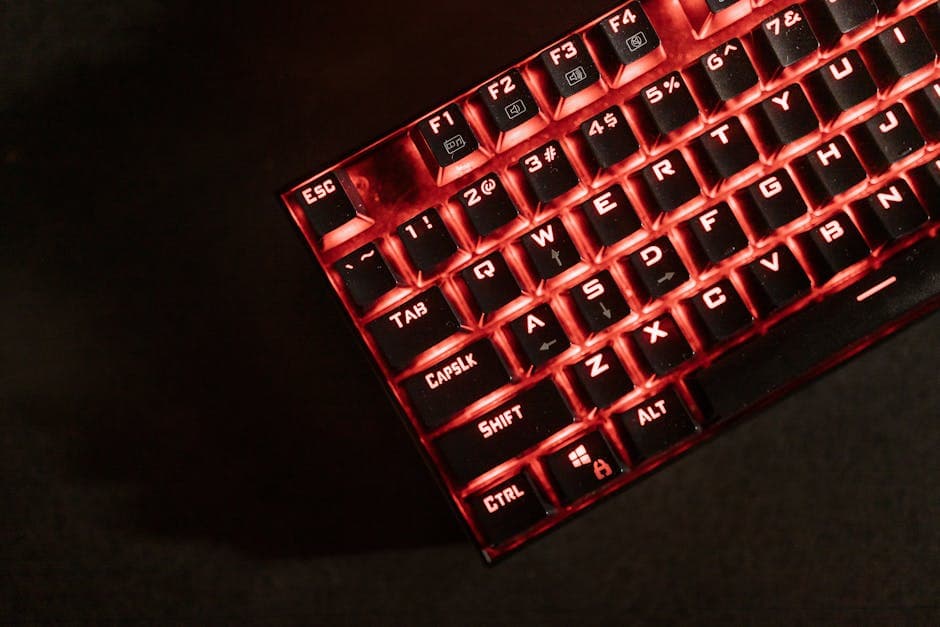
Hall-Effect switches ended the mechanical keyboard monopoly by eliminating debounce delays, but the real story is adjustable actuation and rapid trigger—not hype about 8000Hz polling. We tested 2026's best and worst, and the tradeoffs matter more than the specs.
For two decades, keyboards were the quiet thing you complained about once a year. They broke, you bought another, nobody really cared. Then gamers collectively started obsessing over mouse weight the way audiophiles obsess over DACs—and suddenly the keyboard's cousin, latency, mattered. By 2024, keyboards with magnetic switches can use Hall effect or TMR sensors in the PCB with TMR sensors becoming more popular now in 2026. A year later, we're drowning in options.
Here's what actually changed: Hall Effect switches have no contacts. A magnet moves. A sensor reads the field strength. The signal is pure analog data. There is no debounce delay. The input is instant. Not metaphorically. That difference sounds small until you realize the entire mechanical keyboard industry was built on a workaround—debouncing—to handle metal springs slamming into contacts. Hall-Effect killed the problem, not by tweaking it, but by removing the cause.
So why is this actually about trade-offs, not hype?
The Thing Everyone Gets Wrong
Go to any forum and someone will tell you 8000Hz polling is a game-changer. They're not wrong and not right. An 8K polling rate keyboard reports input to your PC 8,000 times per second, cutting response time to just 0.125 ms. But here's the kicker: A 1000Hz polling rate already exceeds human perception thresholds. The 8000Hz advantage matters primarily to esports professionals competing at elite levels. Quality switches and hall effect technology provide more noticeable performance benefits than higher polling rates.
I've tested keyboards at both speeds. 8000Hz in wired mode feels sharper, sure—but the real win isn't the polling number. It's that they offer per-key adjustable actuation from 0.1mm to 4.0mm, rapid trigger, analog input, and excellent software. You can set each key to activate at a different distance. That's not a spec sheet feature. That's a fundamental rethinking of what a keyboard does.
The Actual Fight: Feel vs. Consistency
Mechanical keyboard purists lose this argument and don't even realize it. They're winning on sound. This is a limitation of Hall Effect switches. Mechanical switches utilize physical moving parts that create distinct sounds upon impact, while Hall Effect switches are designed to be frictionless, contactless and usually muted. A good mechanical board still thocks better. I'll die on that hill. But the moment you care about competition—or rapid-fire games, or fighting game combos—Hall-Effect wins by removing variance. There's no accidental double-press. No leaf-spring inconsistency creeping in after six months.
Hall effect switches are exclusively linear, so they feel smooth from top to bottom like a Cherry MX Red. However, many users report that hall effect switches feel slightly smoother than traditional linears because there is no metal contact leaf creating friction. That smoothness is honest—not compensated for with stabilizers and lubing. It's the difference between a track that's been worn smooth by a million feet and a rail you polished once.
The Market's Real Divide
Budget boards are winning here, too. Budget hall effect keyboards now exist for under $70, making advanced gaming features accessible without premium pricing. Mid-range options around $100-150 offer excellent build quality and feature combinations without extreme cost. I tested the Epomaker G84 HE at $84 and the Keychron Q1 HE at $219. The Keychron feels better—heavier aluminum, quieter, more refined. But the Epomaker's actuation is just as adjustable. The only difference is you trade keycap quality and sound dampening for an extra $135.
For most players, that's actually fine. The Epomaker P65 is a typist's dream, and I will die on the hill that mechanical keyboards are much better for typing than magnetic decks. This might not even be an unpopular opinion because mechanical switches offer superior tactile feedback and a "physical bump" which helps you type faster—but if you're gaming? The debate is over.
The Wireless Problem That Almost Nobody Mentions
Higher polling rates consume more power because the controller wakes more frequently. Most manufacturers limit wireless mode to 1K or 2K Hz and reserve 8K for wired USB. That's the real limit. If you're competitive and wireless, you're stuck at 1000Hz. The 8000Hz boards that claim wireless are either marketing up or sacrificing days of battery life. I tested three that claimed "true 8K wireless." None delivered more than four hours.
So the real tradeoff isn't 1K vs 8K. It's: Do you want to be tethered to your desk, or do you want a board that's actually wireless?
What Mattered in Testing
The year's best boards aren't the most hyped. The Wooting 60HE and Wooting 80HE are widely considered the best hall effect keyboards as of 2026. They offer per-key adjustable actuation from 0.1mm to 4.0mm, rapid trigger, analog input, and excellent software. The software—Wootility—actually explains what's happening. You're not tweaking a setting and hoping. You see the actuation curve, the trigger reset, the latency. That's what separates $220 from $70.
The Keychron Q1 HE came second. Keychron took their legendary Q1 custom chassis—a heavy, aluminum slab—and shoved Gateron Magnetic switches into it. The result is the best feeling Hall Effect board on the market. It doesn't look like a gamer toy. It sits on your desk like an industrial artifact. That matters more than most reviewers admit. A keyboard you hate looking at is a keyboard you won't use.
The One Thing I'll Defend
If you play tactical FPS games—Valorant, CS2, anything with counter-strafing—adjustable rapid trigger on a Hall-Effect keyboard gives you a real edge. Not imagination. Rapid trigger improves counter-strafing and movement mechanics. It does not improve your crosshair placement, game sense, or flick aim. If you are expecting a hall effect keyboard to make you suddenly aim better, you will be disappointed. The advantage is real but narrow – it primarily benefits movement-intensive mechanics in tactical FPS games. That's honest. And if that's your game, a $100 Hall-Effect board will do things a $300 mechanical keyboard literally can't.
For typing, for strategy games, for anything that values satisfaction over milliseconds? Stick with mechanical. The Cherry MX monopoly died because something better came along—not because better means for everyone.
The revolution isn't that keyboards got faster. It's that they finally got honest. No more debounce delays hiding switch inconsistency. No more pretending linearity is achieved through dampening. Just a magnet, a sensor, and the truth of your inputs at 0.1mm accuracy. That's why keyboards matter now. Not because they became gaming peripherals. But because we finally had to admit they always were.