Fi Ultra Tracker: Is Direct-to-Cell Tech Finally the Wilderness Whistle for Our Pets?
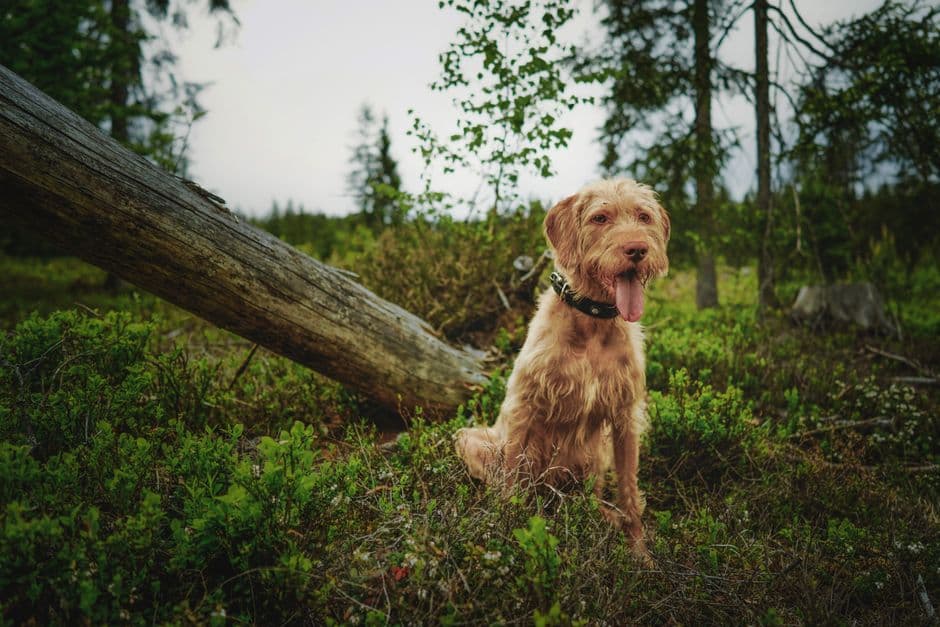
The Fi Ultra tracker promises untethered GPS for your dog, even in dead zones, thanks to Starlink's satellite tech. I spent two weeks putting it to the test on trails and around town.
The marketing blurb for the Fi Ultra pet tracker practically sings a siren song for anyone who's ever let their dog off-leash in a place where cell towers fear to tread. "Direct-to-cell Starlink technology," it proclaims, promising location tracking "anywhere on Earth" where the satellites can see your furry friend. As someone who’s spent countless hours wrestling with spotty GPS signals on my own phone while out on trails, and subsequently worrying about my dog’s whereabouts if he were to bolt, this sounded like it could genuinely be a game-changer. I packed the Fi Ultra, clipped it onto my dog, Buster (a beagle mix with an uncanny knack for finding trouble), and headed for the hills – and some notoriously dead zones – to see if it lived up to the hype.
First, let's talk about the tech. Starlink's direct-to-cell service, a relatively new development, aims to bypass the need for terrestrial cell networks. Instead, your device (in this case, the Fi Ultra) communicates directly with Starlink satellites. This is a big deal. Most GPS pet trackers rely on a combination of GPS for location and a cellular connection to send that data back to your phone. If there's no cell signal, the tracker is effectively blind. Fi’s approach, if it works, could liberate pet owners from that anxiety in places like deep national forests, remote camping spots, or even just that one weird patch of woods behind the local park where your phone always dies.
Getting the Fi Ultra set up was straightforward. The device itself is a relatively slim puck that attaches securely to Buster’s existing collar. The companion app on my phone walked me through the pairing process, which involved connecting the tracker to my home Wi-Fi for initial firmware updates and to establish a baseline. The app interface is clean and intuitive, focusing on the essential functions: live location, location history, and safety zones.
The real test, of course, was leaving civilization behind. We spent a weekend camping in a state park known for its abysmal cell service. My own phone regularly showed "No Service." I opened the Fi app and watched Buster's little blue dot. It was there. And it was updating. Not with the frantic, second-by-second precision you might get in a city park, but reliably. I’d move a good distance, and within a minute or two, the dot on the map would shift to reflect Buster’s new position. This was exactly what I’d hoped for. I could see if he’d wandered off chasing a squirrel further than I expected, and more importantly, I could see where he was if I needed to call him back or, in a worst-case scenario, locate him.
One afternoon, Buster, in a burst of beagle enthusiasm, decided to investigate a particularly intriguing scent trail that took him out of sight behind a thick stand of trees. My heart did that familiar clench. I pulled out my phone, opened the Fi app, and there he was, a few hundred yards deeper into the woods than I would have been comfortable with if I were relying solely on my own phone’s GPS. The tracker showed his location accurately, and after a firm "Buster, come!" he trotted back into view. The relief was palpable. This is the functionality that makes the Fi Ultra potentially worth the investment for adventurous pet owners.
However, it's not all boundless open spaces and happy trails. The Fi Ultra is a subscription service. There's an upfront cost for the device, and then a monthly or annual fee for the tracking service. This is standard for most advanced GPS trackers, but it’s a cost to factor in. The Starlink direct-to-cell service itself likely contributes to this ongoing expense.
Battery life is another consideration. While the tracker is designed to be robust, the constant communication with satellites will inevitably drain its power. Fi claims up to 10 days of battery life on a single charge, depending on usage and settings. In my testing, particularly with frequent location updates and some extended periods in areas where the tracker was working harder to find a signal, I found it closer to 7-8 days. This is still pretty good, especially compared to older GPS devices that might need charging every couple of days. But it means you need to stay on top of charging it. You don't want to find yourself deep in the wilderness with a dead tracker. The charging puck is magnetic and easy to attach, but remembering to charge it is key.
There are also trade-offs to consider with any technology. While direct-to-cell Starlink is impressive, it’s not infallible. There are still geographical limitations, even if they are less restrictive than cellular coverage. Extreme weather, dense canopy cover, or being deep inside a cave could potentially interfere with the signal. The app provides a "lost dog" mode, which increases the update frequency to get you the most precise location possible. This is a feature that I hope I never have to use, but knowing it’s there is reassuring.
The Fi Ultra isn't just about location tracking, though. It also includes activity monitoring, providing insights into your dog's daily steps, active minutes, and sleep patterns. This is a nice addition, giving you a more holistic view of your pet’s well-being, but for me, the primary draw of this device is its enhanced location capabilities for off-grid adventures.
Is the Fi Ultra a revelation? For pet owners who frequently venture into areas with no cell service, it absolutely could be. The peace of mind it offers in those remote locations is significant. It’s not a perfect device – the subscription cost and battery management are factors – but it tackles a very real problem with cutting-edge technology. If your dog’s adventures regularly take you beyond the reach of terrestrial networks, the Fi Ultra is, without question, worth a serious look. It’s a step towards a future where Fido can roam with a bit more freedom, and you can worry a lot less, no matter how far off the beaten path you go.