Digital Canvases Are Finally Ready to Replace Your Best Prints
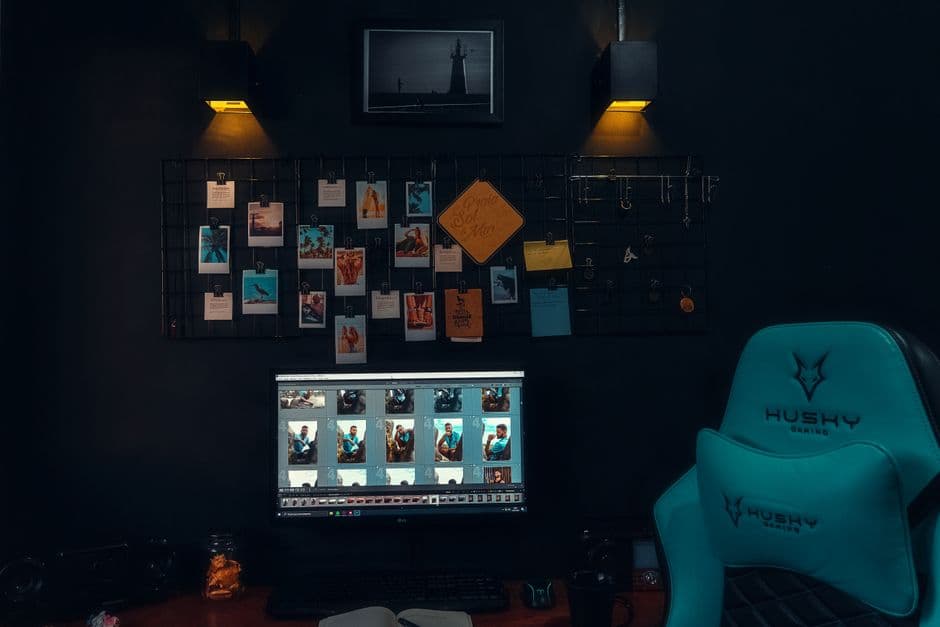
Digital frames are finally moving past the "glowing screen" look. I tested the top contenders to see if they can actually stand in for high-end wall art without looking like a mid-range monitor.
I still have a stack of cardboard tubes in my closet, gathering dust. Inside are various screen prints I’ve picked up over the years—some from Mondo, some from small-press artists. They’re beautiful, tactile, and completely static. If I want to change the look of my office, I have to commit to the hunt for a custom frame, the precise measuring, and the inevitable wall damage from hanging a new piece.
Lately, I’ve been wondering if the era of the physical print is finally meeting its match. For a long time, the argument against digital displays for art was simple: they looked like giant, glowing computer monitors. You couldn’t escape the emissive glare, the harsh backlighting, and the distinct sense that you were just hanging a generic TV on your wall.
But as display technology matures, the hardware is moving toward a look that can actually stand up to a physical piece—if you know what to buy.
The Problem with Paper (and Pixels)
Let’s be clear: a print like the Rory Kurtz "The Odyssey" piece is special because of the ink, the paper stock, and the sheer physicality of it. When you look at a professional screen print, you are seeing the result of layers of ink applied with intention. A digital screen, by its nature, creates light rather than reflecting it.
However, the trade-off with traditional art is permanence. The appeal of a digital display isn't that it’s "better" than a master-class print, but that it solves the problem of rigidity. I’ve spent the last month living with three different approaches to the "digital wall" to see which one stops looking like a screen and starts acting like a frame.
Three Ways to Go Digital
If you are currently shopping for an art display, you are likely looking at three distinct categories.
First, there’s the Samsung The Frame, which is the "living room" choice. It has a stellar matte finish that does a surprisingly good job of killing reflections. However, because it’s a QLED TV at its core, it still suffers from that "glow" at night. It looks like a painting during the day, but in a dim office, you can tell it’s an emissive panel. It’s the best all-rounder, but it’s still fundamentally a TV disguised as a piece of furniture.
Then there is the Meural Canvas II, which is specifically built for this. It uses a TrueArt technology that creates a much more convincing "matte" look than Samsung. When you look at it from an angle, you don't get the weird color shifting you’d see on a cheap monitor. If your priority is the "art gallery" aesthetic rather than watching movies, the Meural’s ability to diffuse ambient light makes it the winner for a home office. It doesn’t have the high-end gaming specs of a premium monitor, but that’s the point—it’s optimized to make a still image look like it’s printed on canvas.
Finally, there’s the "iPad Pro-as-a-frame" approach. Don't do it. I tried mounting an old 12.9-inch iPad Pro with a magnetic stand, and the result is exactly what you’d expect: it’s beautiful for 30 minutes, and then you realize you’re just staring at a mirror with high color accuracy. Even with "Paperlike" screen protectors, the glossy nature of an iPad panel is too reflective for a proper wall installation. You end up seeing your own reflection—and your room—more than the art itself.
Why the Panel Matters More Than the App
If you are going to replace a print that deserves wall space, the display can't be mid. You don't need 120Hz for a still image of a movie poster, but you do need an IPS panel with high color accuracy to avoid the weird tint shifts you get when you look at cheaper monitors from an angle.
The advantage here is that digital displays allow for the curation of a collection that physically wouldn't fit in a room. You can rotate through your library, matching the tone of your art to the mood of the room or the time of day.
The Verdict
Do I think physical, limited-run screen prints are going anywhere? Absolutely not. The "Odyssey" print remains a masterpiece of physical media because of the specific texture and depth that printmaking provides. You cannot replicate the tactile quality of specialized inks on heavy paper with a pixel array.
However, for the rest of your wall space—the stuff you like, the stuff you want to switch up, and the stuff you want to see displayed with decent color accuracy—the hardware has finally reached a threshold where it’s no longer a compromise.
If you’re the type of person who loves the look of a curated space but hates the logistical nightmare of framing and storing dozens of posters, the Meural Canvas II is the boring-but-reliable solution that actually delivers on the promise. It won’t replace your "god-tier" limited editions, but it might just be the most versatile tool in your office setup. Just make sure you’re buying for the panel finish, not the app ecosystem, or you’ll find yourself back where you started: staring at a glowing screen instead of a piece of art.