Beyond the Prompt: Can Searching Your Coding Agent History Change How Developers Work?
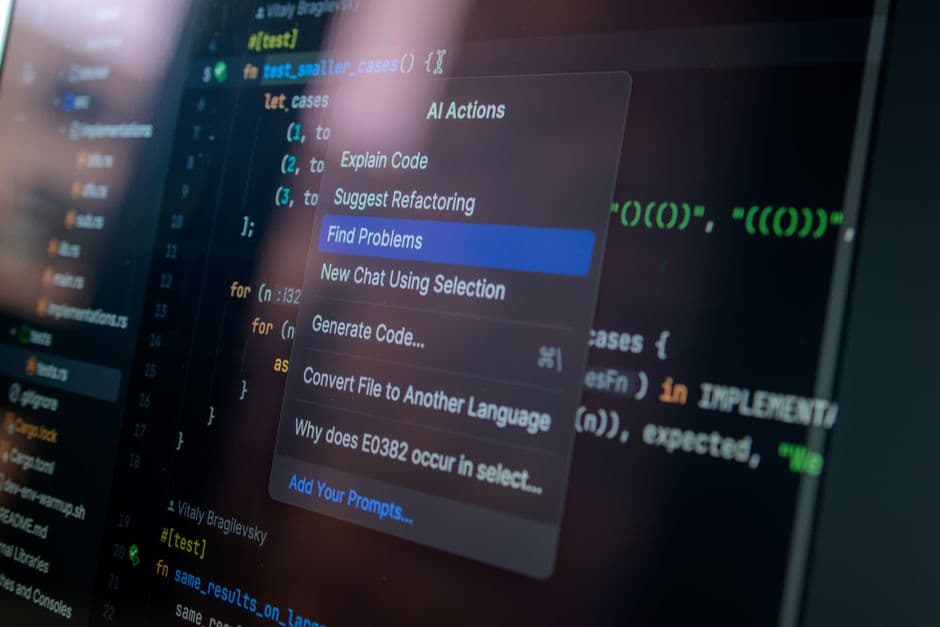
The new 'ctx' tool lets developers search their coding agent's conversation history locally. Could this humble utility become a productivity game-changer?
I remember the first time a game really clicked. It wasn't the flashy graphics or the epic story; it was the sheer elegance of a simple, well-executed mechanic. That's what I look for when I see new tech emerge, especially in the developer space. We're bombarded with AI tools promising to revolutionize workflows, but often, the real value is in the subtle shifts, the small quality-of-life improvements that add up.
Enter 'ctx'. It popped up on 'Show HN', a Reddit community where developers share projects they've built. The premise is deceptively simple: a tool that lets you search the history of your coding agents, directly on your machine. No cloud, no obscure databases, just your conversations with tools like GitHub Copilot, ChatGPT, or whatever else you're using to help you code.
Now, before you roll your eyes and think "great, another niche utility for power users," hear me out. We’re deep into the era of AI-assisted development. My own terminal is a constant back-and-forth with various assistants. I ask for code snippets, I debug with them, I even brainstorm architectural ideas. But once that chat window scrolls out of view, that knowledge, that context, often feels lost. It's like having a brilliant conversation with a colleague and then having no way to refer back to what was said.
That’s where 'ctx' aims to shine. It’s built on the idea that the history of your interactions with AI coding tools is a valuable, albeit unstructured, knowledge base. Think about it: how many times have you wrestled with a bug, got a perfect solution from an AI, only to forget the exact prompt or the nuanced explanation that led you there? Or maybe you asked for a specific configuration, and now you can't recall the exact parameters you used. These aren't just chats; they're records of problem-solving sessions.
The 'ctx' project, as described on its GitHub repository, focuses on indexing these conversations locally. This immediately addresses a major concern for many developers: privacy and data security. With sensitive code and proprietary information often discussed, keeping that data on your own hardware is a significant plus. Unlike cloud-based solutions that might log your prompts and responses, 'ctx' promises a more contained experience.
Does this translate to a genuine productivity boost? My initial skepticism, born from seeing countless AI tools fizzle out after initial hype, started to wane as I considered the practical implications.
The Lost Art of Remembering Prompts
Let's be honest, crafting the perfect prompt can be an art form in itself. You iterate, you refine, you add specific constraints, and then, sometimes, you get that magical response. If you’re like me, you might keep a separate notepad or a long-running document for "killer prompts." But 'ctx' offers a more integrated approach. Instead of maintaining a separate knowledge base, your past successes become searchable. Imagine searching for "how to fix that annoying React memoization bug" and instantly pulling up the exact conversation where Copilot or ChatGPT guided you through it, complete with the code and the reasoning. This isn't just about recalling a solution; it's about recalling the process of arriving at that solution, which can be even more valuable for learning and future problem-solving.
Context is King, Even for AI
We talk a lot about giving AI context. But what about giving ourselves context from our past AI interactions? As developers, we're constantly context-switching. Projects, tasks, different parts of a codebase. If you've been working on a particular feature for weeks, and you used an AI assistant at various stages, being able to quickly search your interaction history could mean the difference between spending minutes and hours trying to piece together where you left off or what assumptions you made. 'ctx' essentially allows you to search your own AI-assisted development timeline.
Beyond Simple Search: Potential for Smarter Workflows
While the current functionality is about searching past conversations, the implications are broader. Imagine if 'ctx' or similar tools could start identifying patterns in your AI interactions. Perhaps it could flag recurring problems you encounter, or suggest best practices based on your successful past solutions. It could become a personalized AI debugging assistant, learning from your specific workflow.
The developers behind 'ctx' have kept it relatively lean, focusing on the core search functionality. This is, in my opinion, a good thing. It avoids the feature creep that often plagues early-stage tools. The core value proposition is strong: make your AI coding history accessible and searchable.
Of course, it's not without its potential hurdles. The effectiveness of 'ctx' will heavily depend on the quality of the underlying AI agent's output in the first place. If the AI’s responses are consistently vague or incorrect, then searching them won’t magically make them useful. Furthermore, the indexing process itself needs to be efficient and not bog down the developer's machine. The 'Show HN' post indicated local indexing, which is promising, but performance will be key for adoption.
For now, 'ctx' presents itself as a pragmatic solution to a growing problem. As AI assistants become more ingrained in our daily coding lives, managing and leveraging the vast amount of information they generate becomes a challenge. Tools like 'ctx' that focus on making this information accessible and useful, rather than just another feature in a bloated application, are the ones that stand a real chance of sticking around. It might not be the next flashy IDE plugin, but the ability to tap into your own AI problem-solving history could very well be the subtle, yet powerful, productivity boost developers have been waiting for. It’s about making the digital breadcrumbs of our AI-assisted journey actually lead somewhere useful.